
Journal
My mother had a beautiful garden growing up in central Florida, and my favorite plants were always the milkweed, because every year, like clockwork, the butterflies would return and begin their metamorphosis right in my backyard. I remember putting together mesh enclosures, with milkweed tucked inside, and housing the dozens of baby caterpillars that were settling in. I would watch each chrysalis turn glassy and dark right before it split open, and feel that same patient thrill of watching something rebuild itself from the inside out. There is something fascinating about watching something come to life while the rest of the world is slowing down and the leaves are beginning to fall.
It turns out I was in good company with the many generations of Mesoamerican culture before me. Long before Día de los Muertos took its current shape, they already believed the dead traveled in the wings of butterflies, drawn back to the world of the living once a year to visit the families who remembered them. When the monarchs began arriving in central Mexico each fall, almost exactly around the same days the holiday falls, it wasn't hard to see why the two ideas fused together. The butterflies weren't a metaphor invented for the occasion. They were already showing up on schedule, by the millions, right on time.
That overlap is what this issue is chasing: Mexico City as a base, and the places just beyond it where the migration, the holiday, and the food all still trace back to the same highland customs, close enough to reach in an afternoon.
"The butterflies do not arrive for the holiday. The holiday arrived to meet the butterflies."
Every year, without instruction, monarchs that have never made the journey before arrive within days of each other at the same handful of oyamel fir forests their great-great-grandparents left the spring before. No single butterfly makes the full round trip. It takes three or four generations to complete the loop, a relay run by insects that have never met.
From Mexico City, two short trips carry you into the heart of it. Piedra Herrada, a monarch sanctuary in the State of Mexico near Valle de Bravo, is about two hours by car and one of the most accessible places to witness the migration. Mixquic, a village within Mexico City's own Tláhuac borough, holds one of the country's most famous Día de los Muertos traditions: a cemetery lit by thousands of candles and marigolds, open to visitors on the nights that matter most. Neither trip requires leaving the safety of well-traveled ground, and both land within the same season, often within the same week.
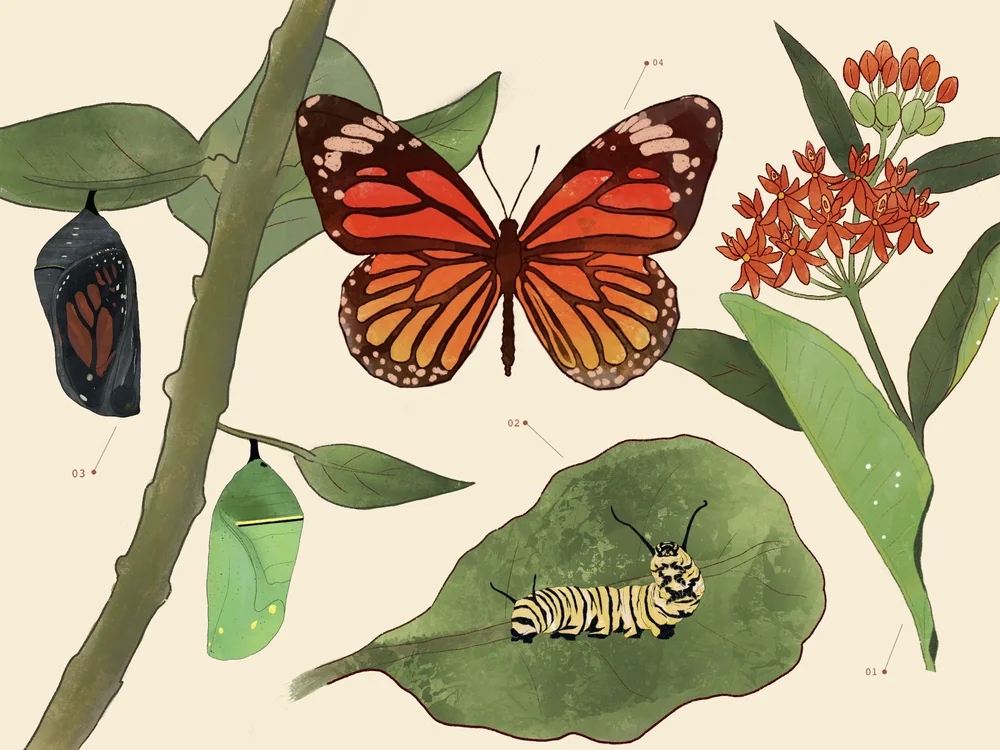
- 01 Egg
- 02 Caterpillar
- 03 Chrysalis
- 04 Adult Monarch
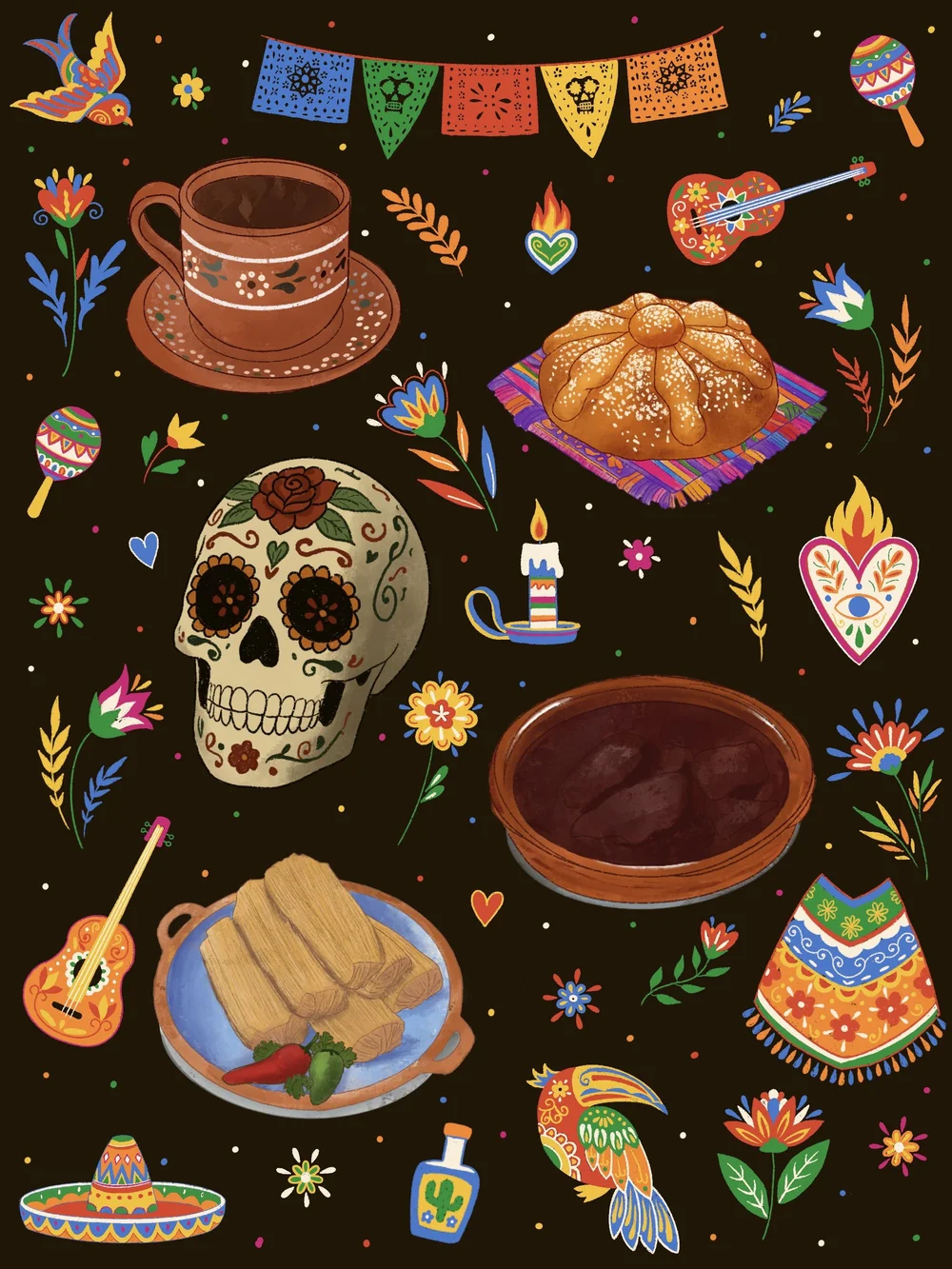
- 01 Champurrado warm chocolate-corn drink
- 02 Pan de Muerto sweet bread, made for the holiday
- 03 Calaveras de Azúcar sugar skulls, more decoration than dessert
- 04 Mole rich sauce, dozens of regional versions
- 05 Tamales corn masa, endless fillings
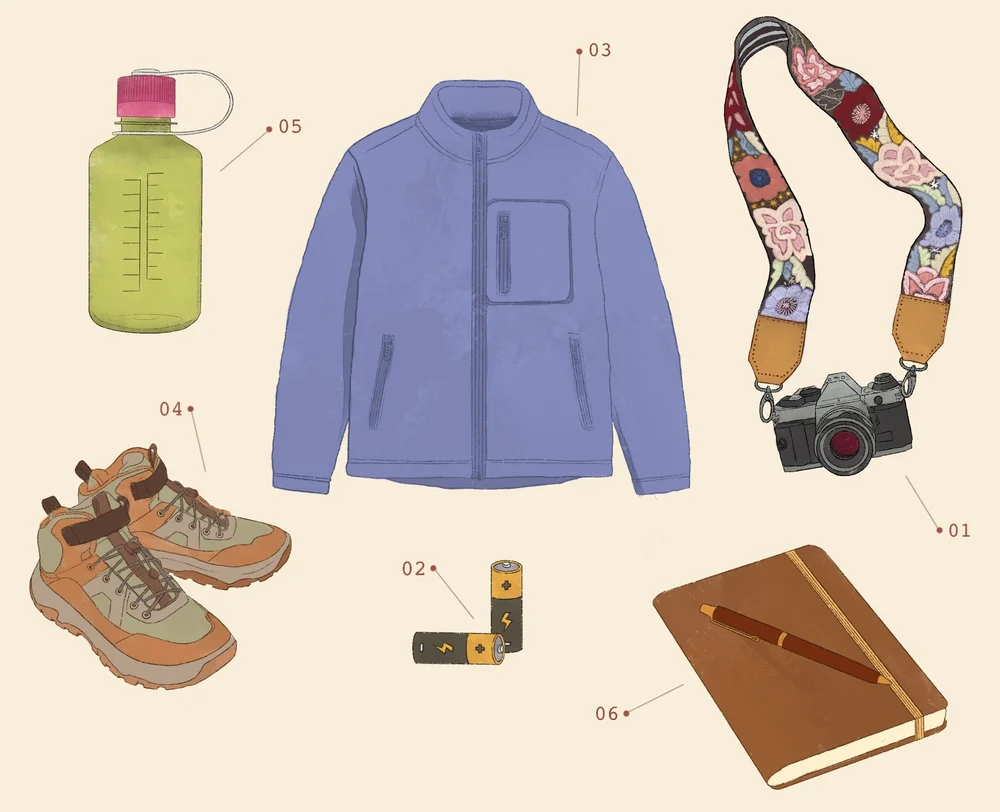
- 01 Camera & strap
- 02 Spare batteries
- 03 Light layer or jacket
- 04 Comfortable walking shoes
- 05 Reusable water bottle
- 06 Journal & pen
The oyamel fir forests the monarchs depend on have shrunk to a fraction of their historic range, threatened by illegal logging and a warming climate. Each issue, we spotlight one organization working to protect what we've come to love. This time it's Butterflies and Their People, A.C., a nonprofit that directly employs local Michoacán community members to monitor and protect the forest their families have always called home.
Pair this issue with Dining with the Dead: A Feast for the Souls on Day of the Dead by Mariana Nuño Ruiz, over 100 traditional recipes tied to the holiday, from a Guadalajara-raised author cooking from her abuela's kitchen. It is a fitting companion to a region whose food, like its butterflies and its holiday, was never separate from the rest of what makes it sacred.