
Journal
Icy streams, wide tundra valleys, mountains at a scale that defies belief: this is the Last Frontier. Before any of this, there was a summer I spent guiding on the Alaska Railroad, from Denali all the way down to Seward. I watched moose wade through willow thickets, bears lazily pick berries in the late summer sun, and once came face to face with a lynx in the backcountry. Alaska was the first place that taught me how small we all really are in a world so vast.
The 49th state still wears its frontier close to the surface. Gold rush storefronts lean into their false fronts along boardwalks that have been reinforced more than rebuilt, and the longer you spend there, the more you notice how much of what looks like untouched wilderness is actually a living, tended landscape. The Yup'ik, Tlingit, Iñupiat, Athabascan, and many other peoples have called these waters and forests home for thousands of years, long before any prospector arrived chasing gold, and their knowledge of this land runs far deeper than the state's short written history suggests.
Alaska has a way of making everyone within its grasp feel small. This issue is my attempt to bring a little of that scale home to you, along with a story about what happens when the ice that shaped this place begins, quite literally, to move on.
"When a glacier retreats, it leaves behind a new beginning, one the salmon reach first."
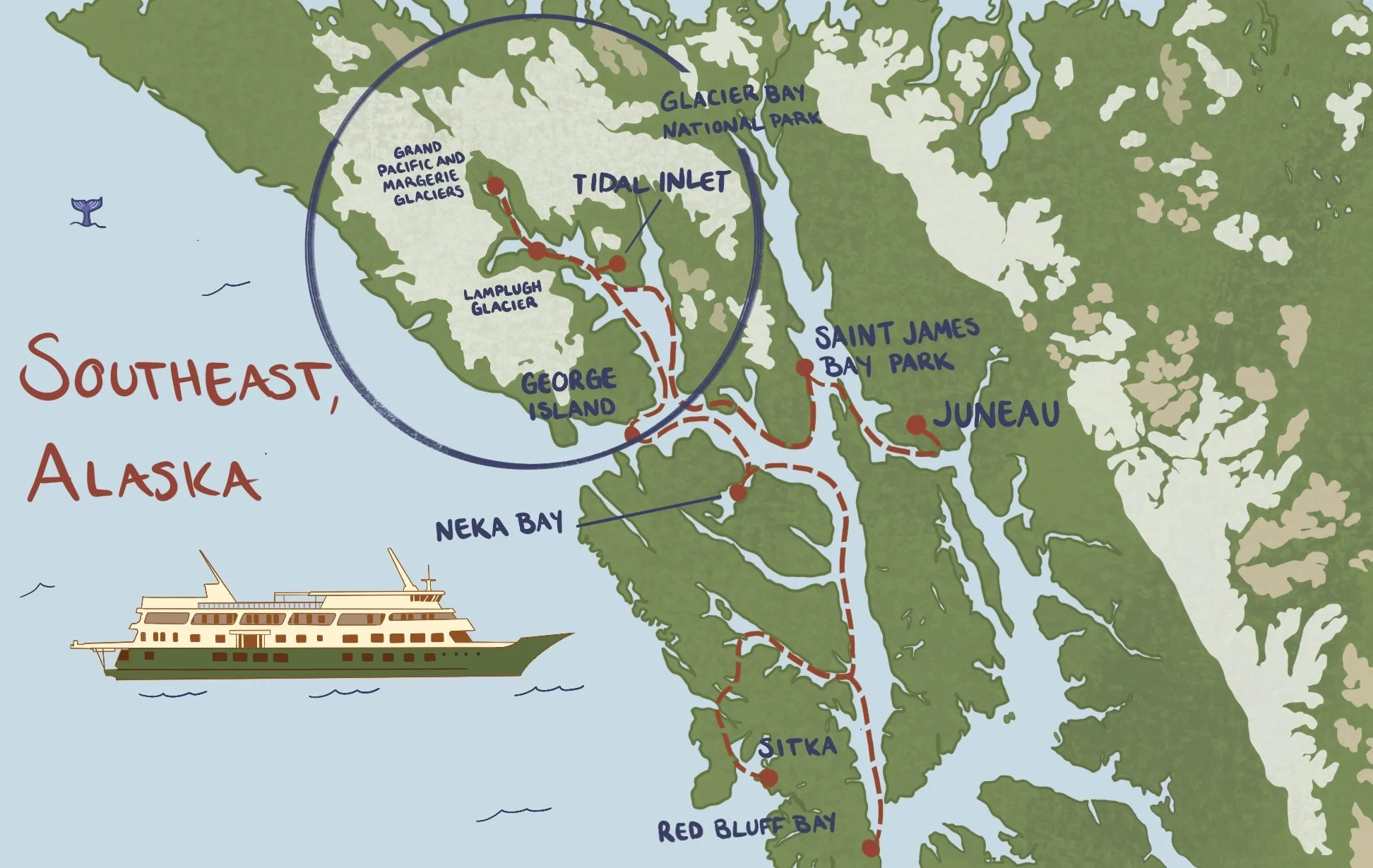
The glaciers of Southeast Alaska have been retreating for decades, and the streams they leave behind do not stay barren for long. Meltwater carves fresh channels through newly exposed gravel, and within a few short years, salmon begin finding their way into water that did not exist within living memory.
The bears follow close behind. Brown bears have adapted their fishing routes to these newly opened streams, sometimes years ahead of what biologists expected, timing their arrival to runs that are shifting earlier as glacial melt changes water temperature and flow. It is one of the fastest examples of a landscape rewriting its own rules, and one you can watch unfold from the deck of a small expedition ship moving quietly through the fjords.
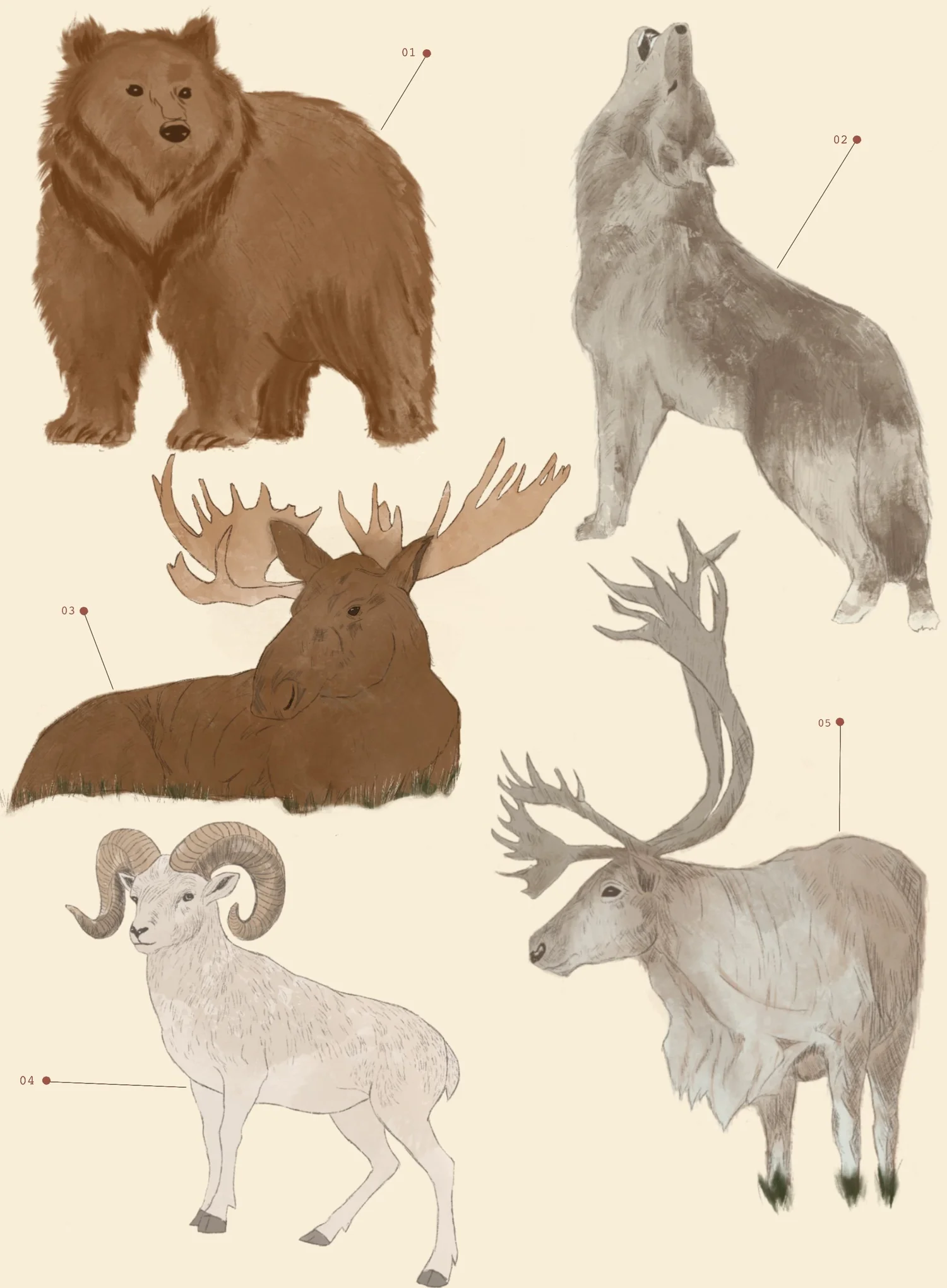
- 01 Grizzly Bear
- 02 Grey Wolf
- 03 Moose
- 04 Dall Sheep
- 05 Caribou
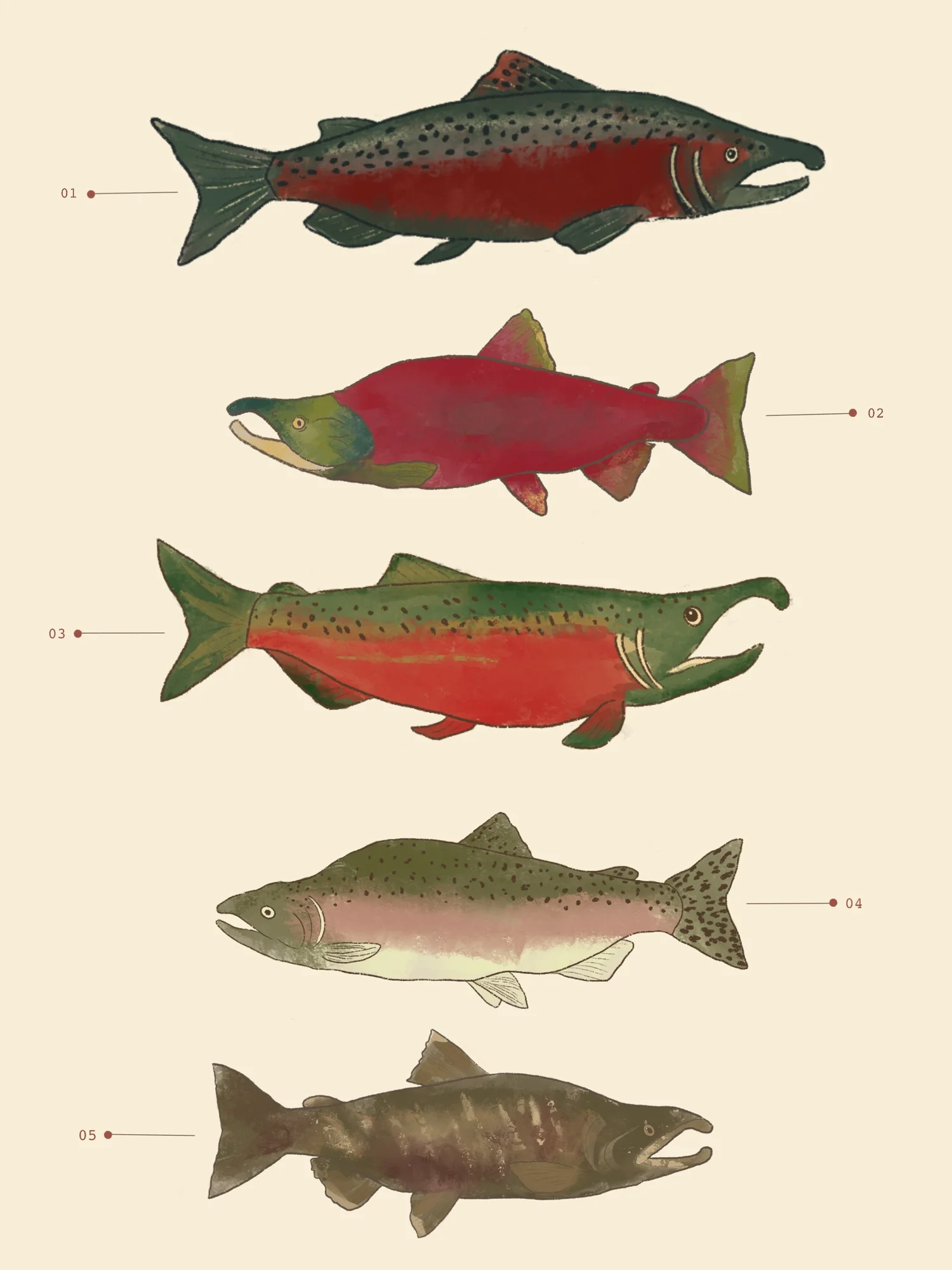
- 01 King (Chinook) Late May – June
- 02 Sockeye (Red) June – August
- 03 Coho (Silver) July – September
- 04 Pink (Humpy) July – August
- 05 Chum (Dog) July – September
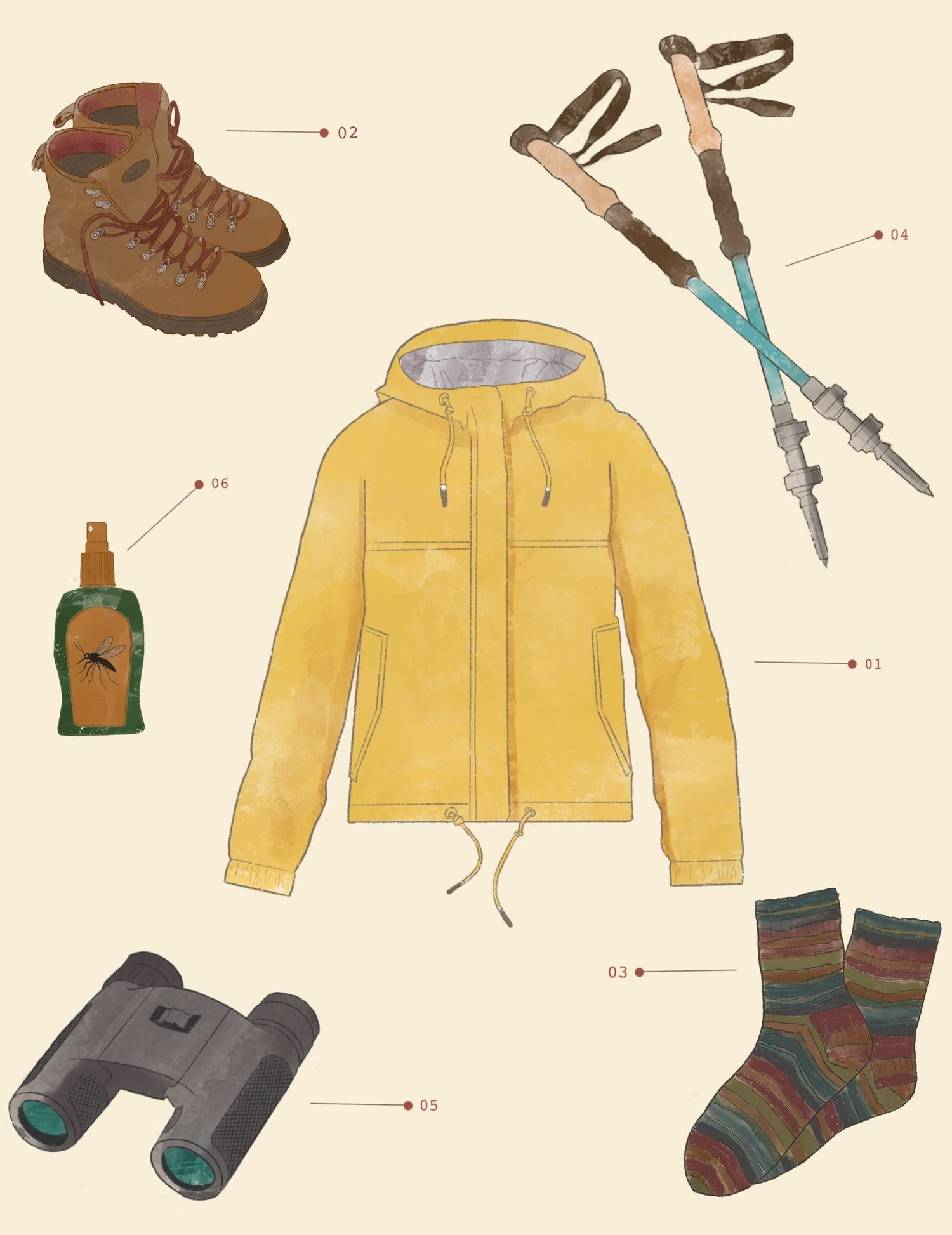
- 01 Rain jacket
- 02 Waterproof hiking boots
- 03 Wool socks
- 04 Trekking poles
- 05 Field binoculars
- 06 Bug spray
Alaska's wild salmon runs are not guaranteed, and the ice retreating through this issue's story is only part of what's shifting. Each issue, we spotlight one organization working to protect what we've come to love. This time it's SalmonState, an Alaska-run advocacy group fighting to keep salmon habitat intact, from Bristol Bay to the rivers of the Southeast panhandle. Learn more, or lend your support, at salmonstate.org.
If you read one book before this trip, make it this one. John McPhee's Coming into the Country is a sprawling, decades-old account of the Alaskan bush, the gold rush towns still clinging to relevance, and the long argument over what the state should become. Forty-plus years on, it remains the finest thing written about the place.