Hawai’i
Most people picture one Hawai'i, when really there are six. Each island keeps its own weather, its own rhythm, and a completely different idea of a perfect day! I've spent six years specializing in these islands, and what still surprises me is how little they have in common.
That range is the best part. You can stand at the edge of a crater where the ground is still being made, take the hundred curves of the road to Hāna past waterfalls that appear and vanish in the same breath, and walk the green cliffs of the Nāpali Coast with the Pacific breaking a thousand feet below. Then, on a warm evening somewhere inland, watch a hula told by someone whose family has danced that same story for generations.
The culture here runs far deeper than most visitors ever see, and the travelers who come home changed are the ones who go looking for it. I love pairing two islands in a single trip, so you leave having actually met them rather than simply visited.
A Note from the Field:
Piper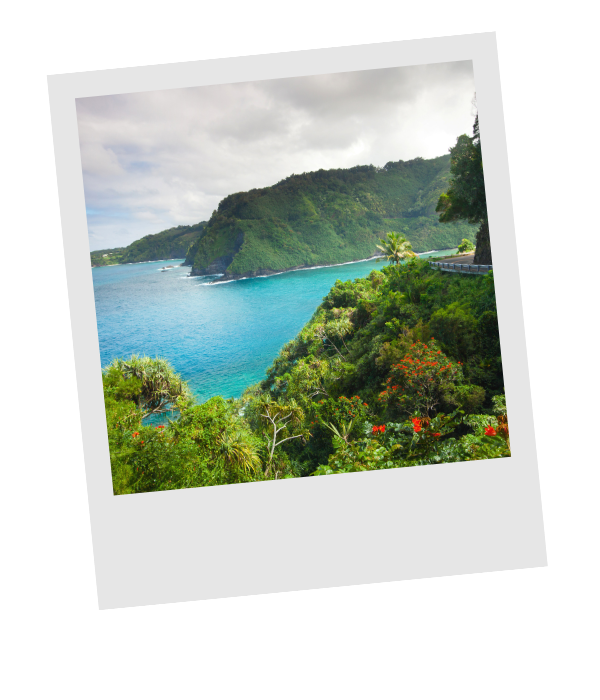
Moments Worth the Journey
-
![Performers in green dresses gathered around the imu at a traditional Hawaiian lū'au]()
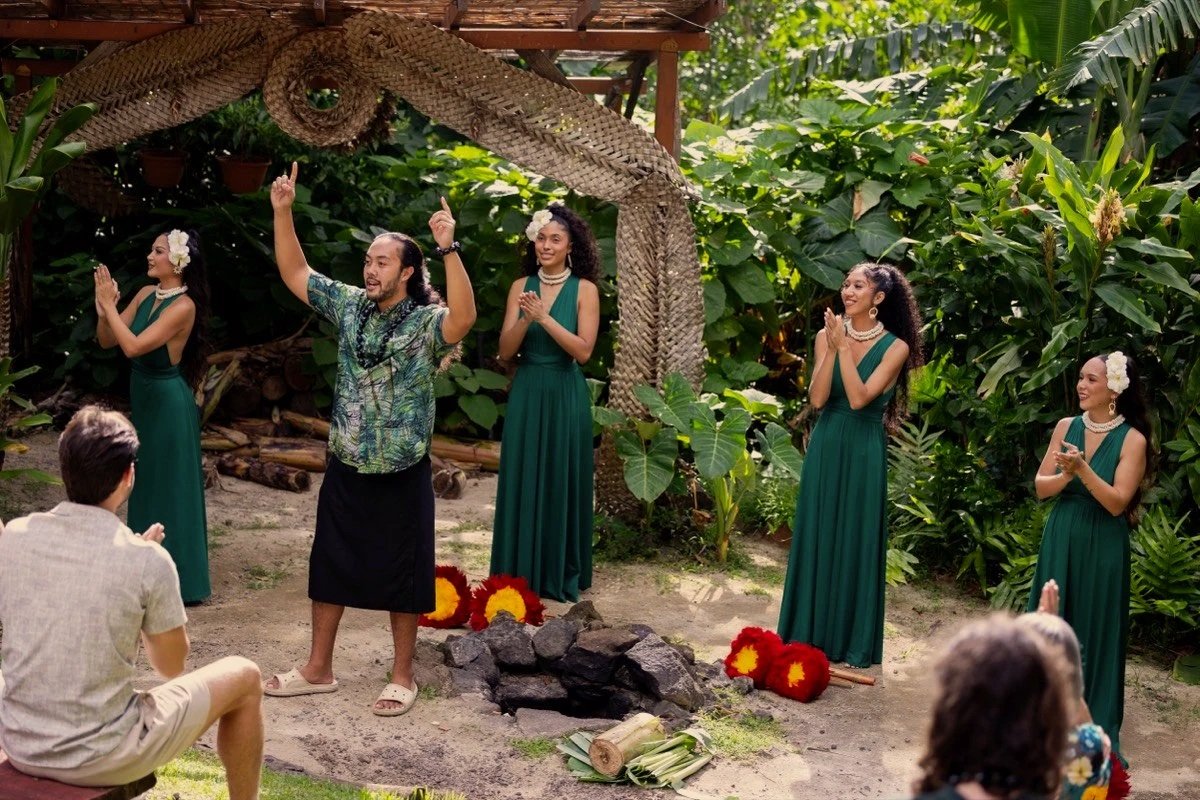
An authentic lū'au
On a hillside above Honolulu, a small gathering shares the story of the islands through chant, hula, and food grown on the land around you. The imu is uncovered at sunset, the kālua pig lifted steaming from the earth, and the whole evening feels closer to a family celebration than a show.
-
![Aerial view of the crescent-shaped Molokini Crater off the coast of Maui, Hawai'i]()
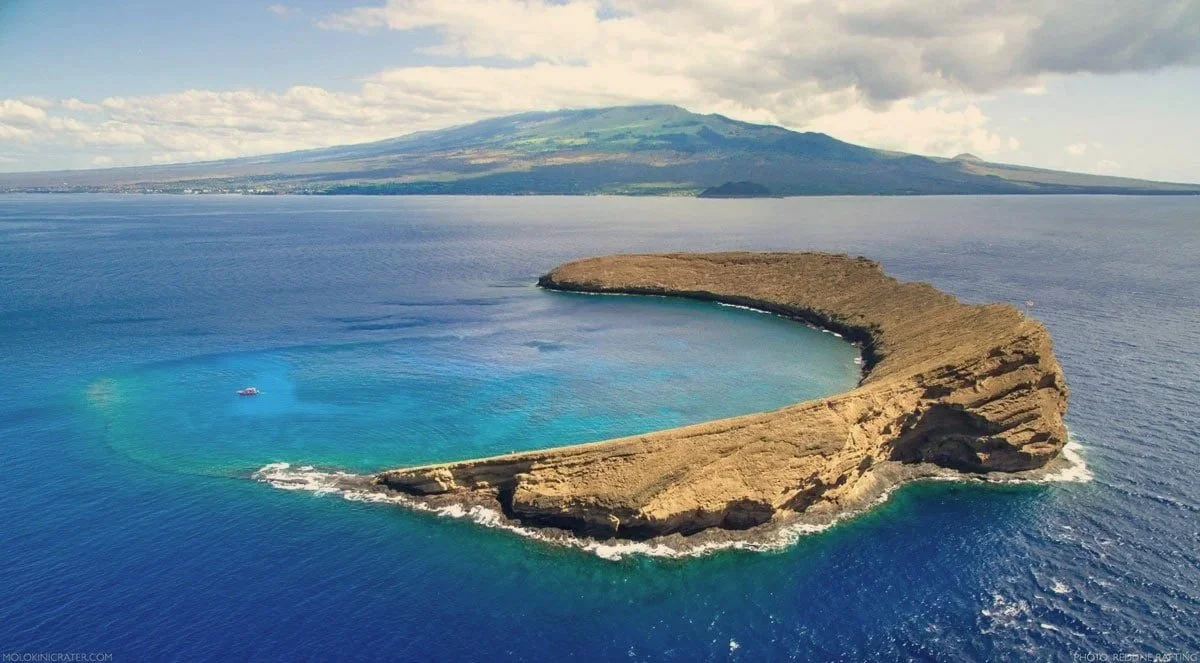
Snorkeling Molokini Crater
The sunken rim of a volcano rises just above the surface off Maui's coast, and inside it the water turns a clear, impossible blue. You drift among butterflyfish, parrotfish, and the occasional reef shark, with visibility running a hundred feet or more.
-
![Aerial view of the red and green cliffs of Waimea Canyon on Kaua'i, Hawai'i]()
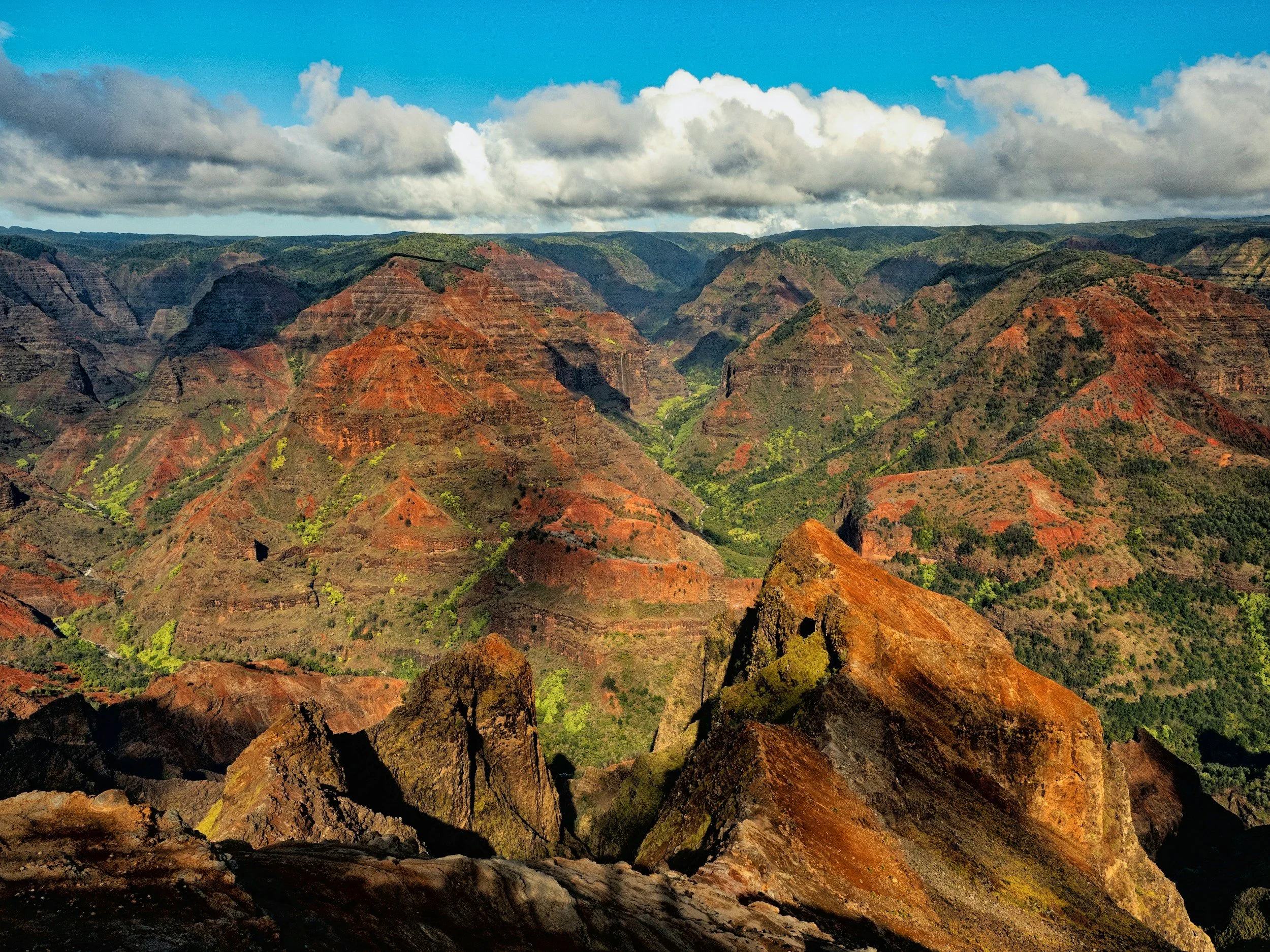
A helicopter over Waimea Canyon
Kaua'i opens beneath you in layers of red and green, the "Grand Canyon of the Pacific" cut deep into the island's heart. The doors come off, the waterfalls of Mount Wai'ale'ale appear in the mist, and you see the parts of the island no road ever reaches.
-
![Glowing lava meeting the ocean with steam rising off Hawai'i's Big Island]()
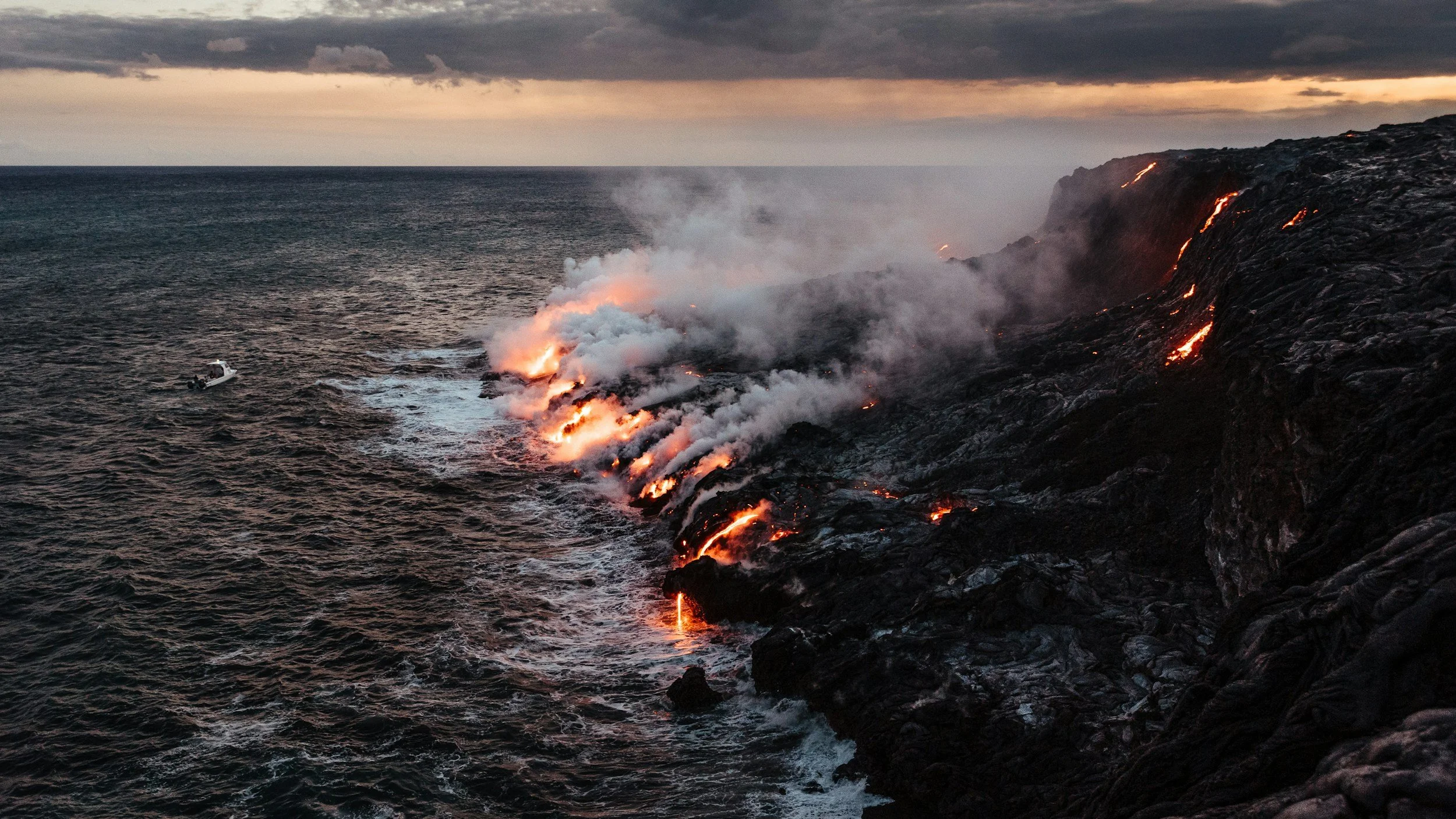
Hawai'i Volcanoes National Park
You walk through a lava tube, across a steaming crater floor, and past fields of hardened black rock where the island is still building itself. After dark, the glow from Kīlauea's caldera lights the clouds from below.
-
![Aerial view of a black sand beach along Maui's road to Hāna, Hawai'i]()
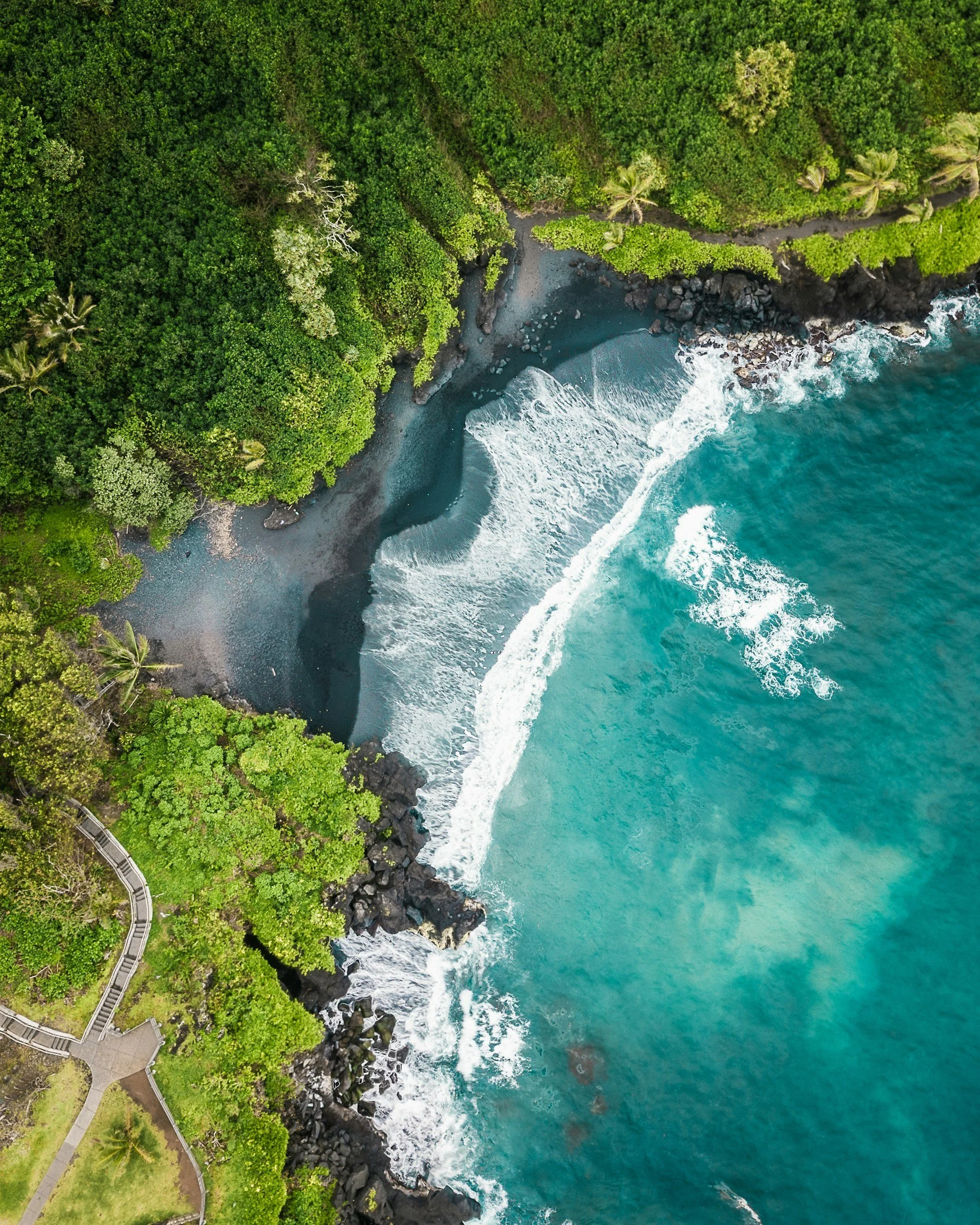
The road to Hāna
Six hundred curves and more than fifty one-lane bridges carry you along Maui's windward coast past waterfalls, bamboo forests, and black sand beaches. The drive is the destination, and the trick is to take all day and stop often.
-
![Manta ray gliding above the ocean floor during a night dive off the Kona coast, Hawai'i]()
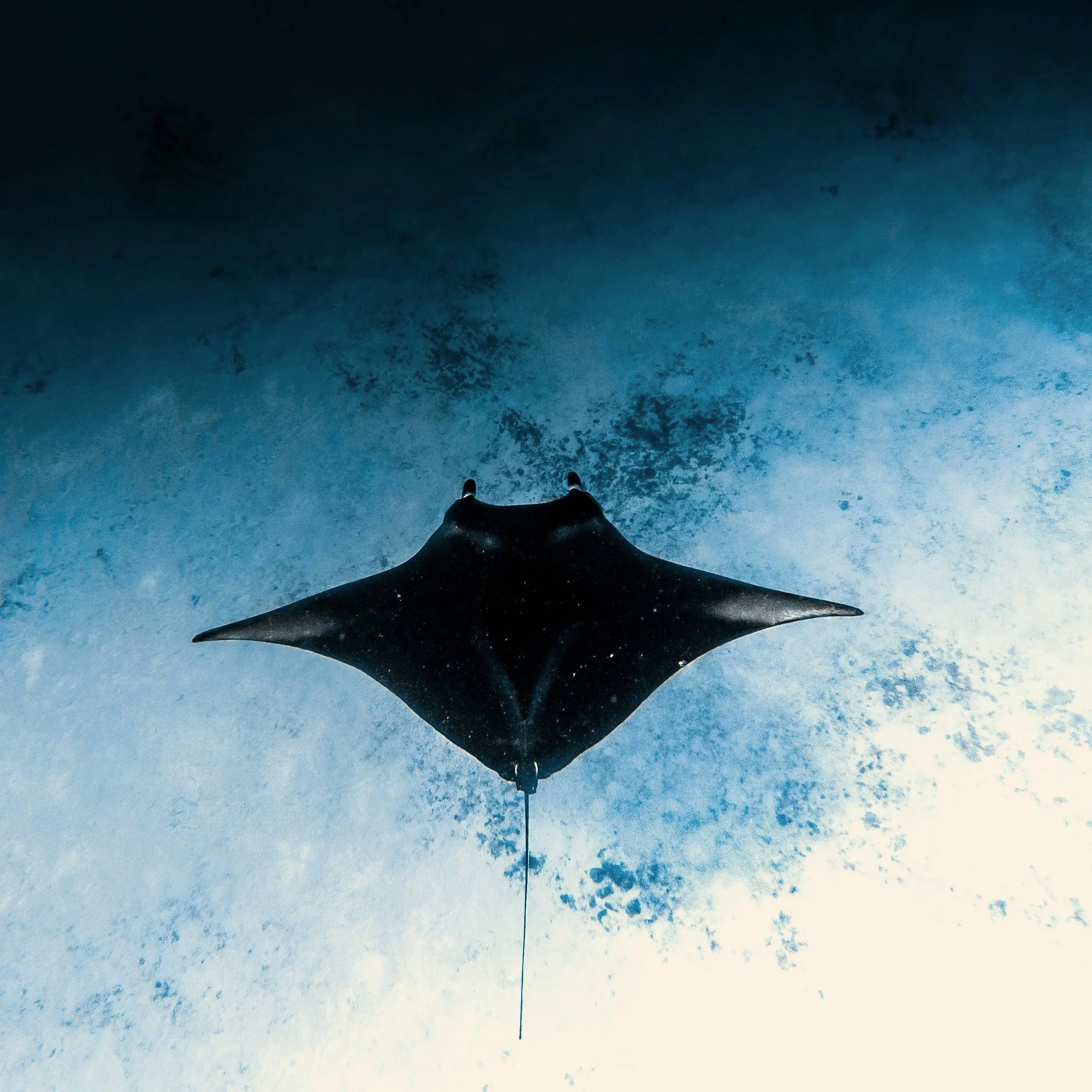
Night snorkeling with manta rays
Off the Kona coast, lights draw plankton to the surface, and the mantas arrive to feed, some with wingspans wider than you are tall. They glide and barrel-roll inches beneath you, silent and entirely unbothered by your presence.
-
![Sunlit tasting room cottage at a winery in upcountry Maui, Hawai'i]()
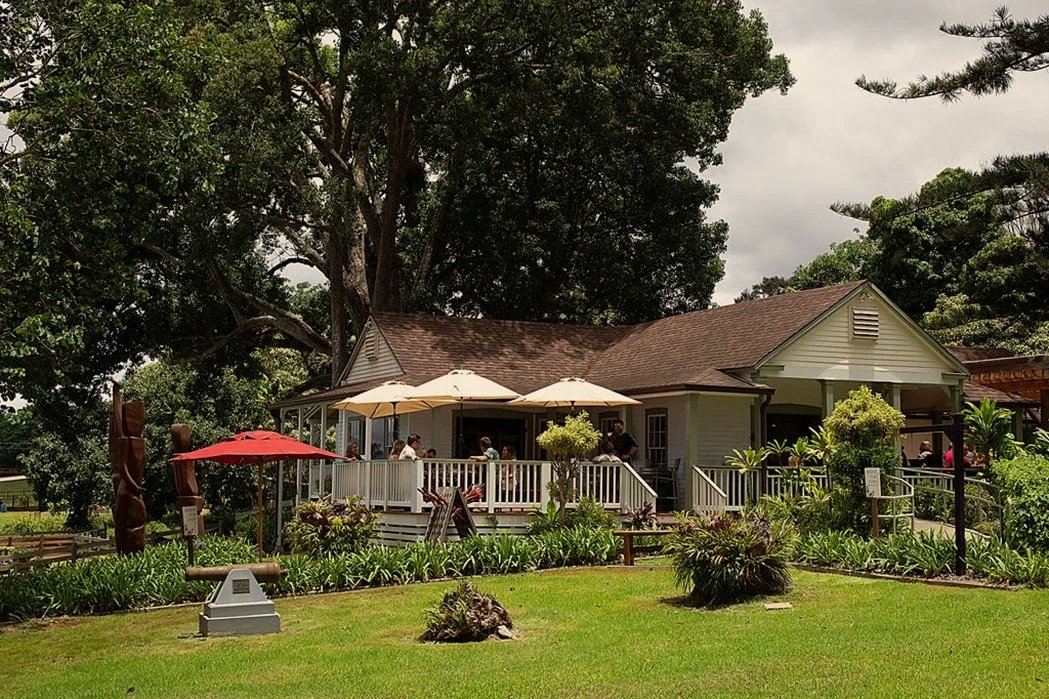
Pineapple wine on the slopes of Haleakalā
Upcountry Maui's cool air and volcanic soil produce wines you'll find nowhere else, including one made entirely from Maui Gold pineapple. The tasting room sits in an old ranch cottage with paniolo history in its walls and the mountain rising behind you.
-
![Milky Way stretching above the mountain peaks of Hawai'i]()
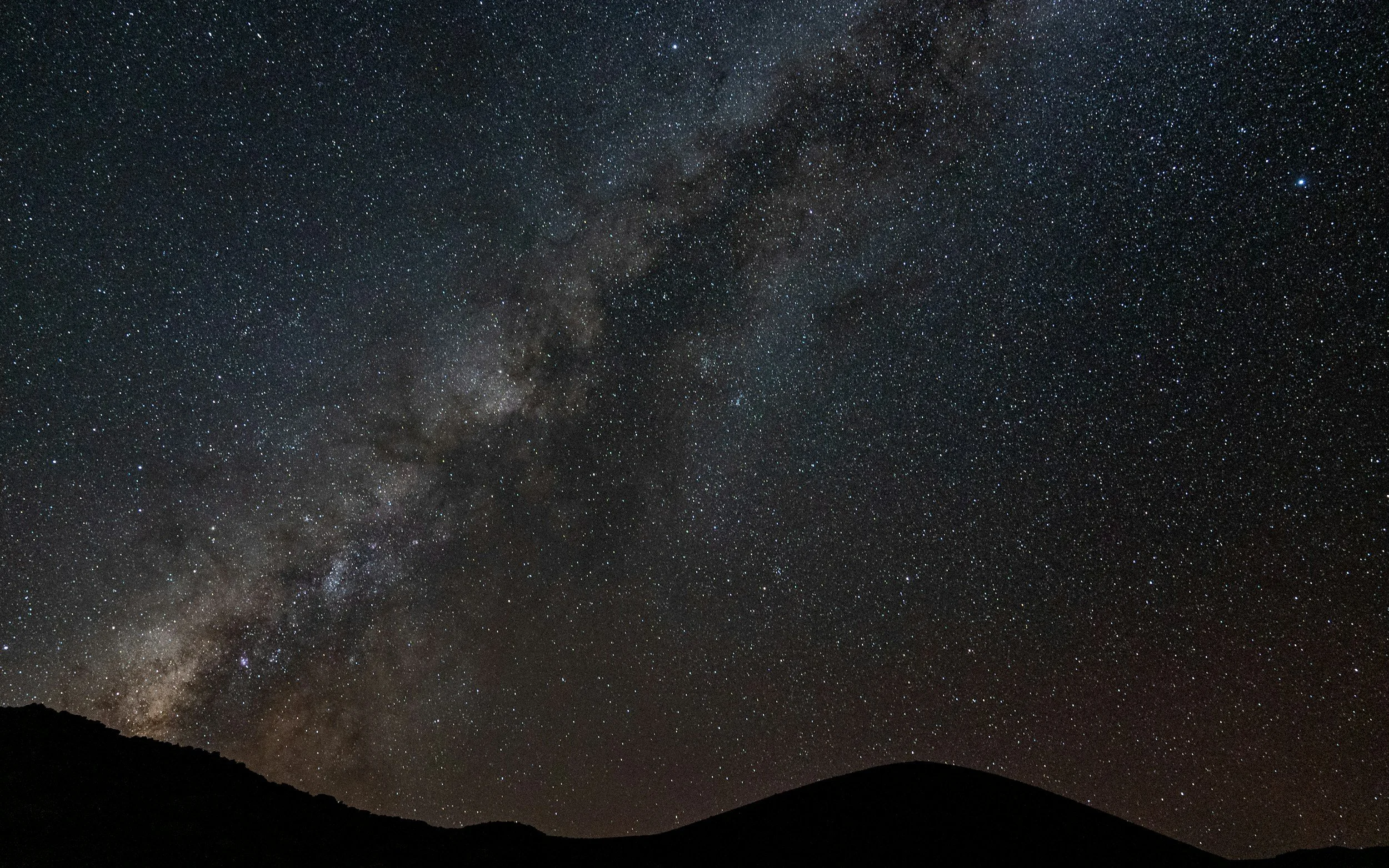
Sunset and stars atop Mauna Kea
You climb nearly fourteen thousand feet to stand above the clouds as the sun drops into the Pacific. Then the sky fills in, and at one of the clearest viewing spots on Earth, the Milky Way arrives in detail you'll remember for years.
-
![Horseback riders on the sand along Oahu's North Shore with the Pacific beyond]()
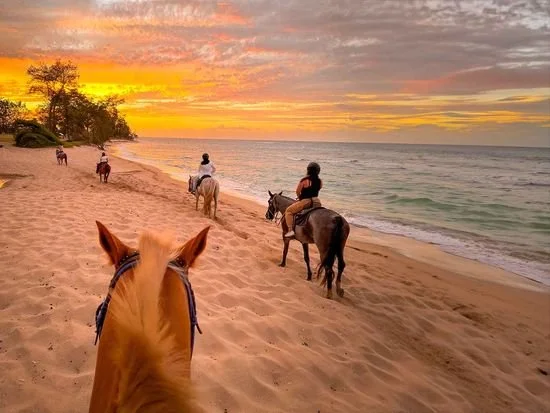
Horseback riding on Oahu's North Shore
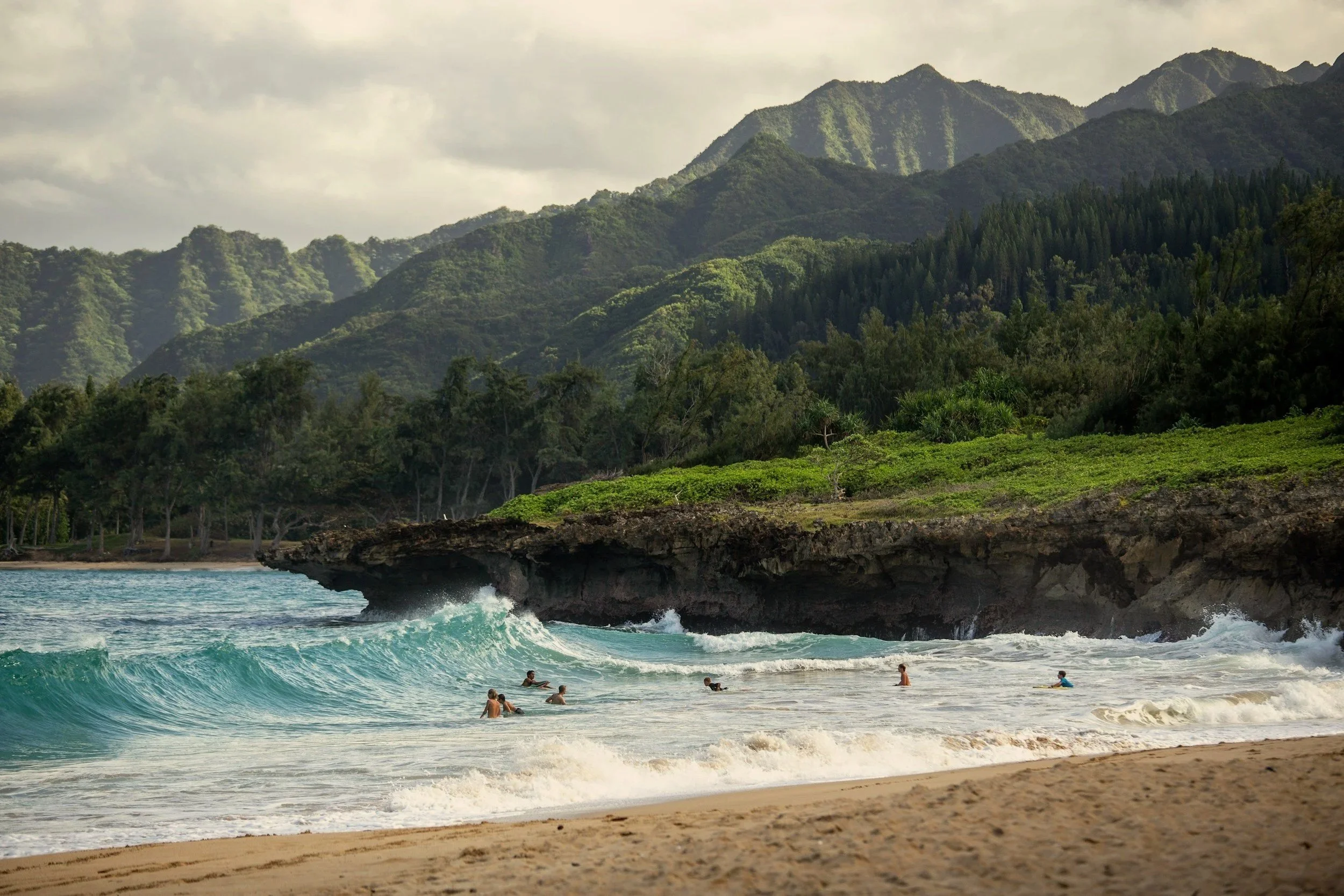
You ride along the sand with the Pacific on one side and the Ko'olau mountains on the other, past the beaches where the winter swells arrive. The pace is easy, the views enormous, and the whole thing feels like old Hawai'i.
-
![Humpback whale breaching in the winter waters off Maui, Hawai'i]()
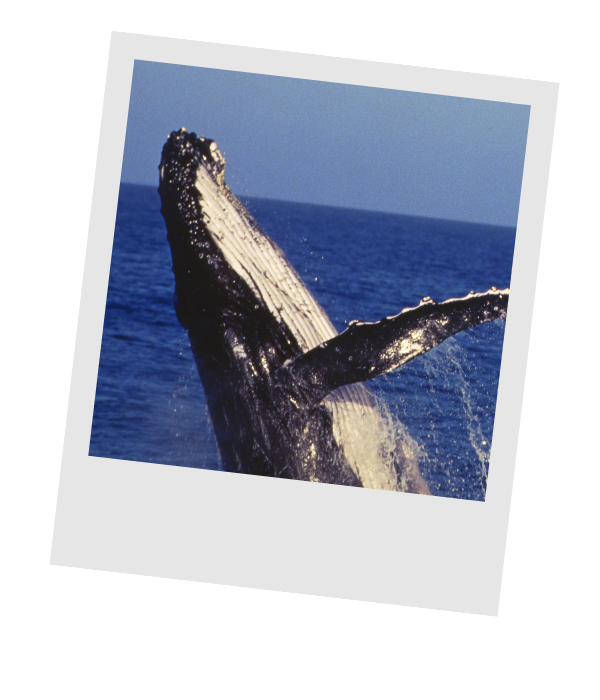
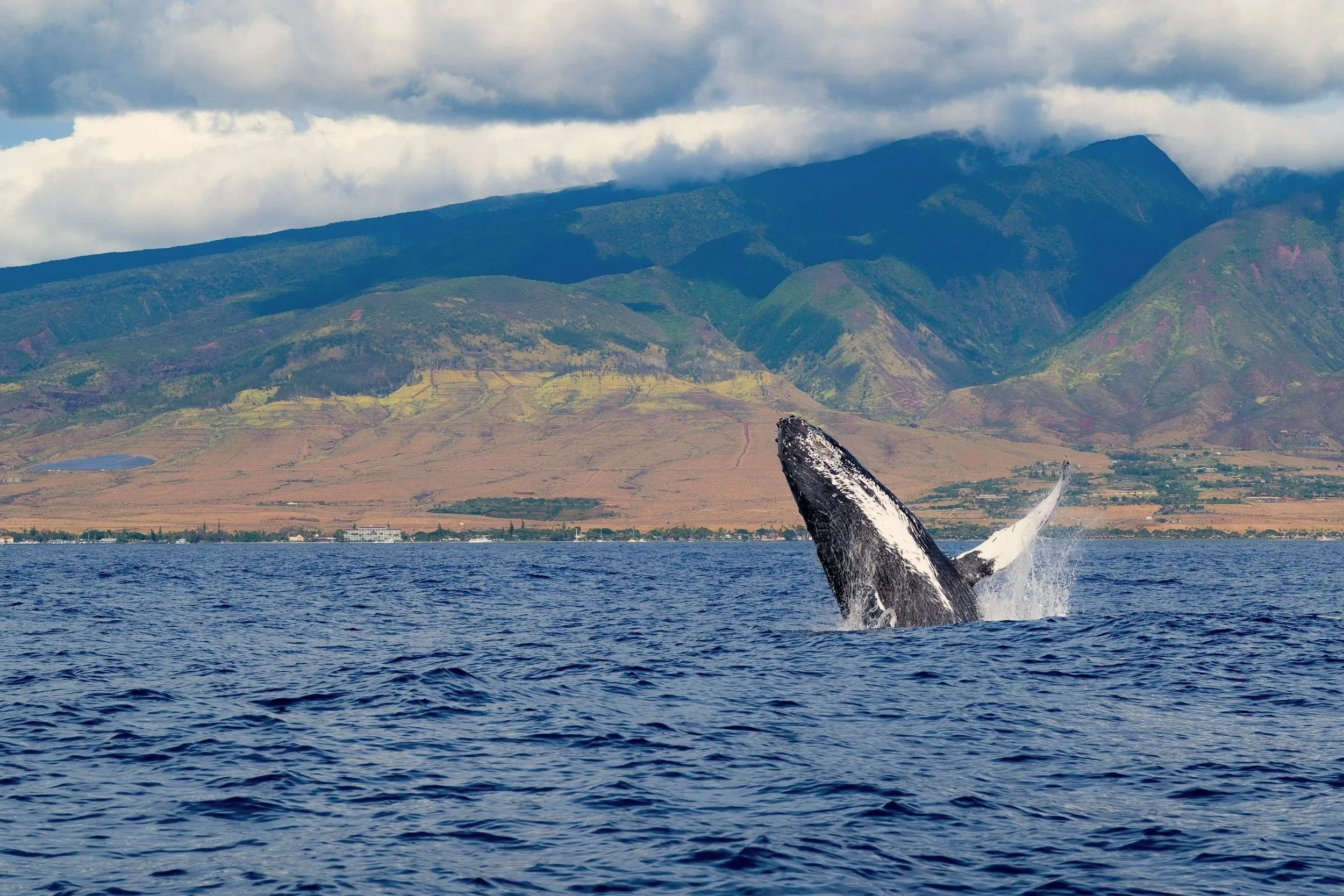
Humpback whales in Maui's winter waters
Thousands of humpbacks arrive each winter from Alaska to breed and calve in the warm shallows between the islands. From a small boat you'll see breaches, tail slaps, and mothers moving slowly with their calves alongside.
-
![Green fluted cliffs of the Nāpali Coast rising above the sea on Kaua'i,]()
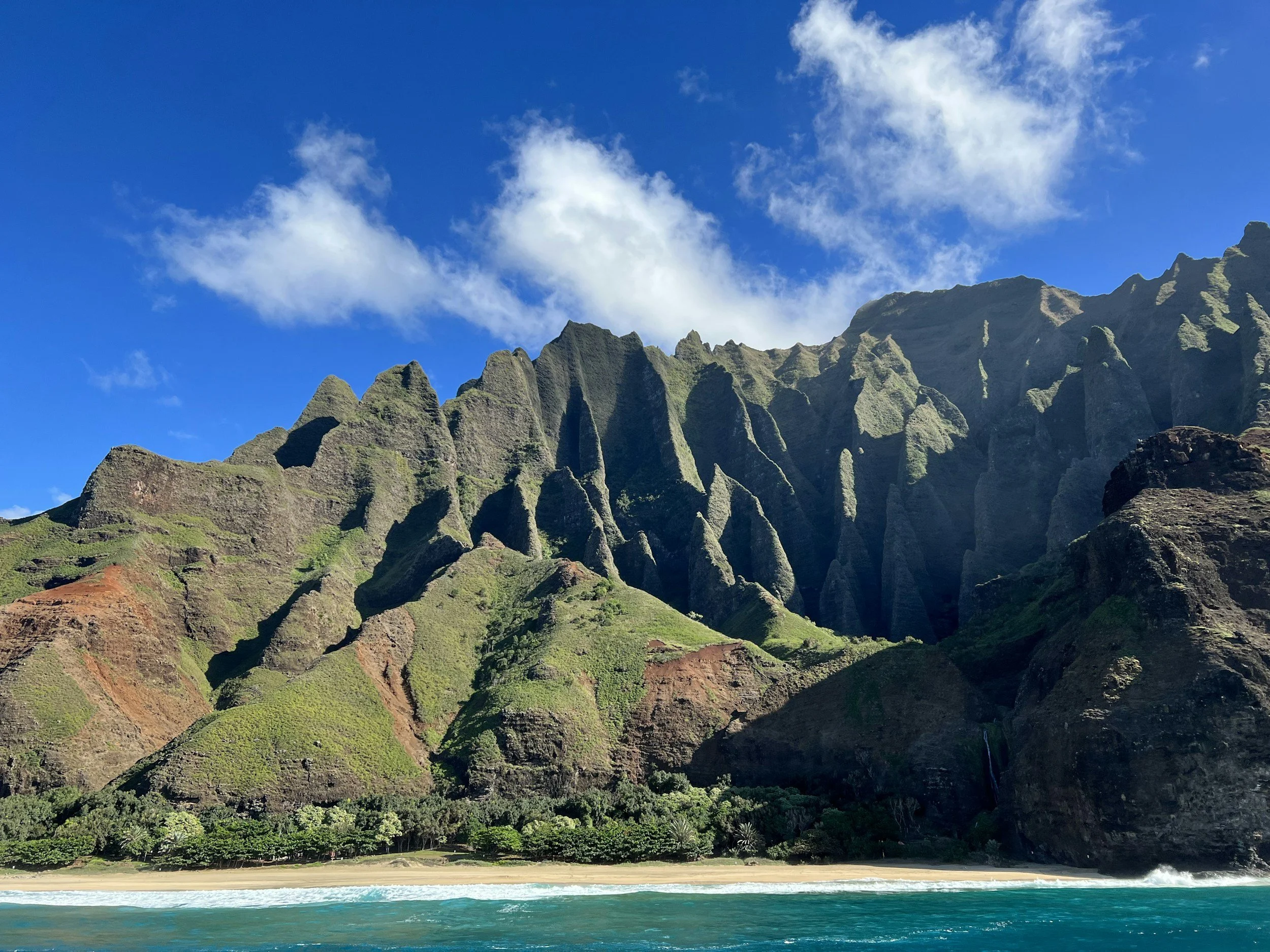
Kaua'i's Nāpali Coast by catamaran
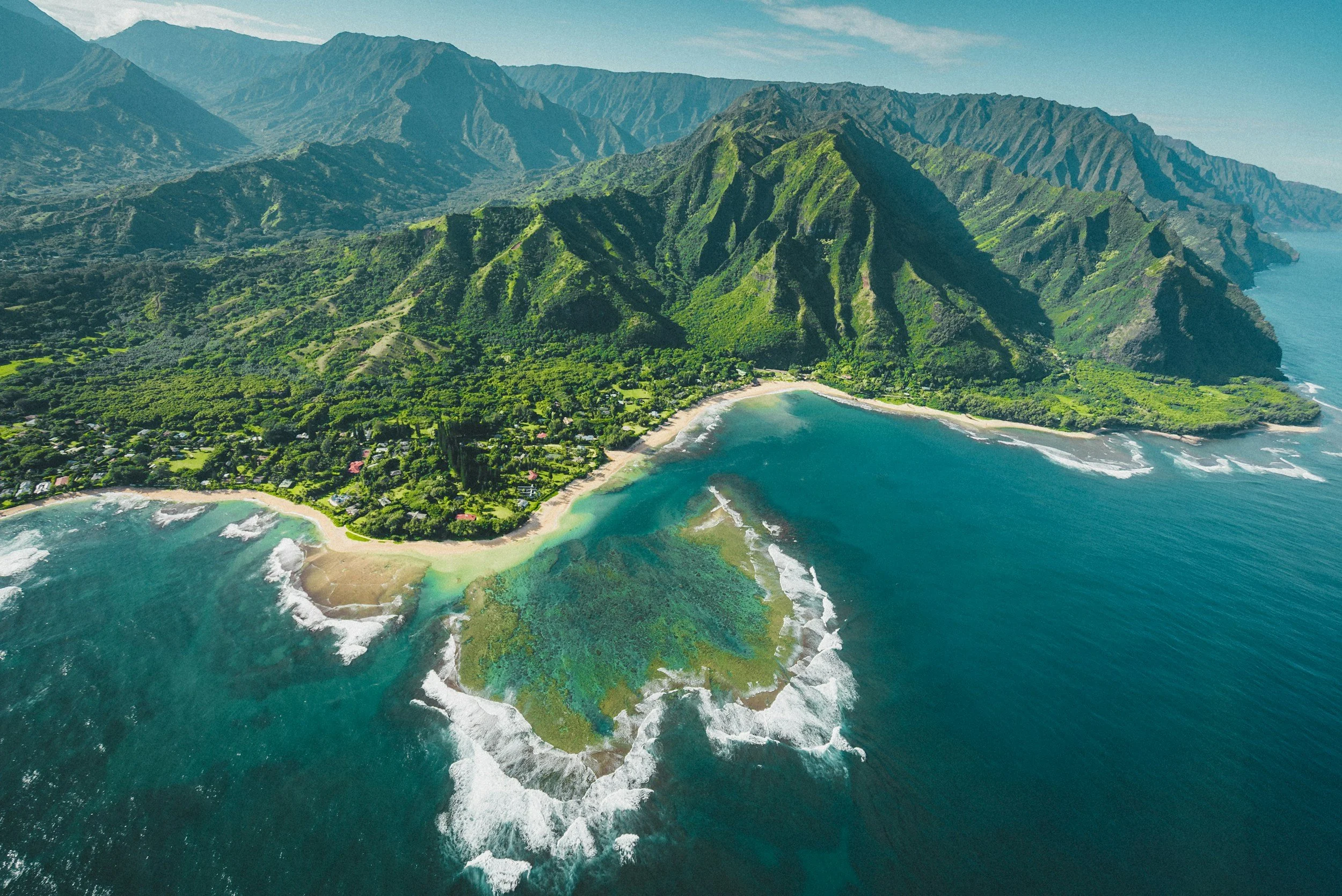
Green cliffs rise two thousand feet straight out of the sea, folded and fluted like fabric. Spinner dolphins ride the bow, sea caves open along the shoreline, and the whole coast stays entirely roadless.
-
![Cup of Kona coffee on a clifftop with coffee fields and the ocean beyond, Hawai'i]()
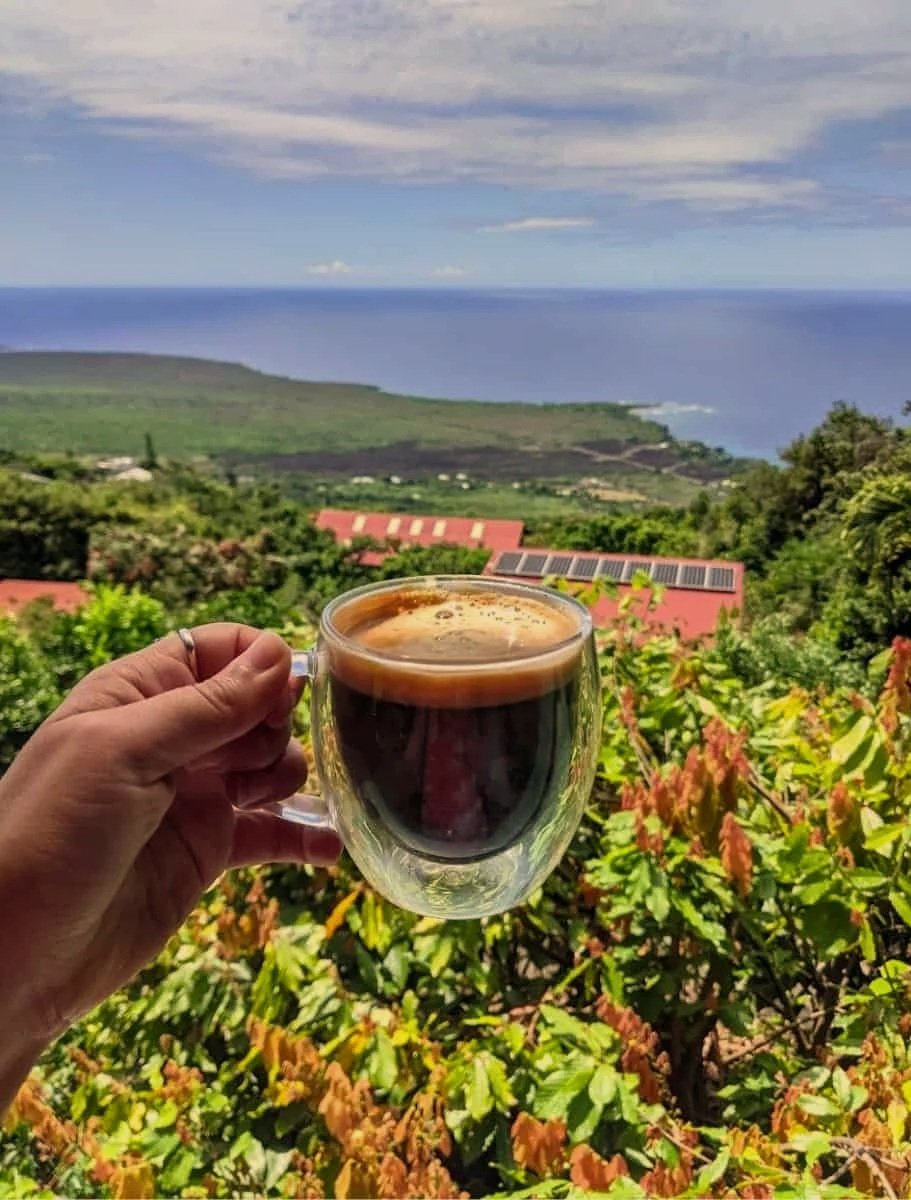
Kona coffee farm
Steep volcanic slopes above the Kona coast grow some of the most sought-after coffee in the world, often on farms worked by the same family for generations. You walk the rows, learn how the cherries are picked and dried, and taste the difference it makes.
-
![Olive-green sand and ancient cinder cone cliffs at Papakōlea Beach on Hawai'i's Big Island]()
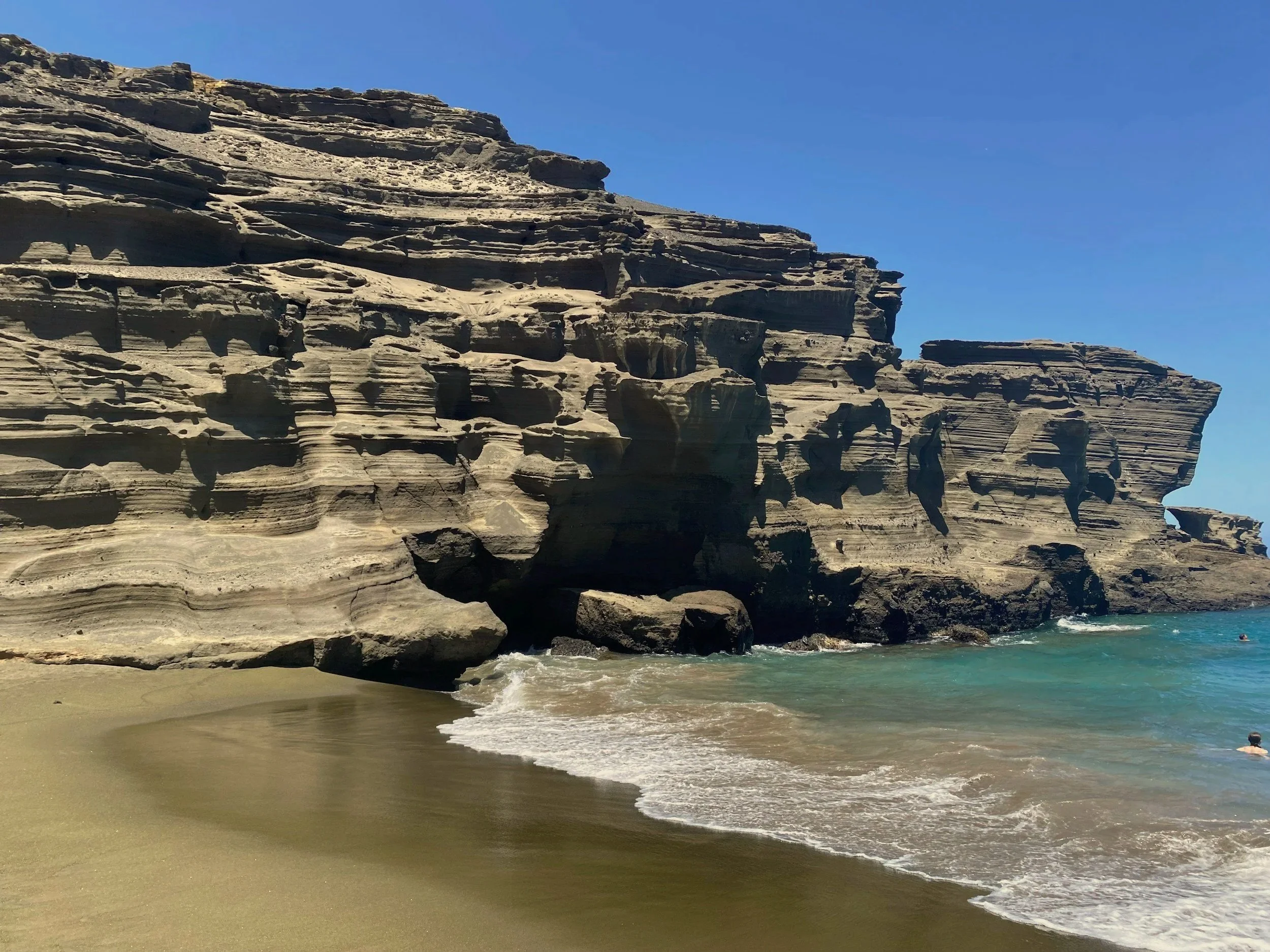
Green sand at Papakōlea
A two-mile walk along the southern tip of the Big Island brings you to one of four green sand beaches on Earth, its color coming from olivine crystals in an ancient cinder cone. You'll have earned the swim by the time you arrive.
Meet the Islands
O’ahu
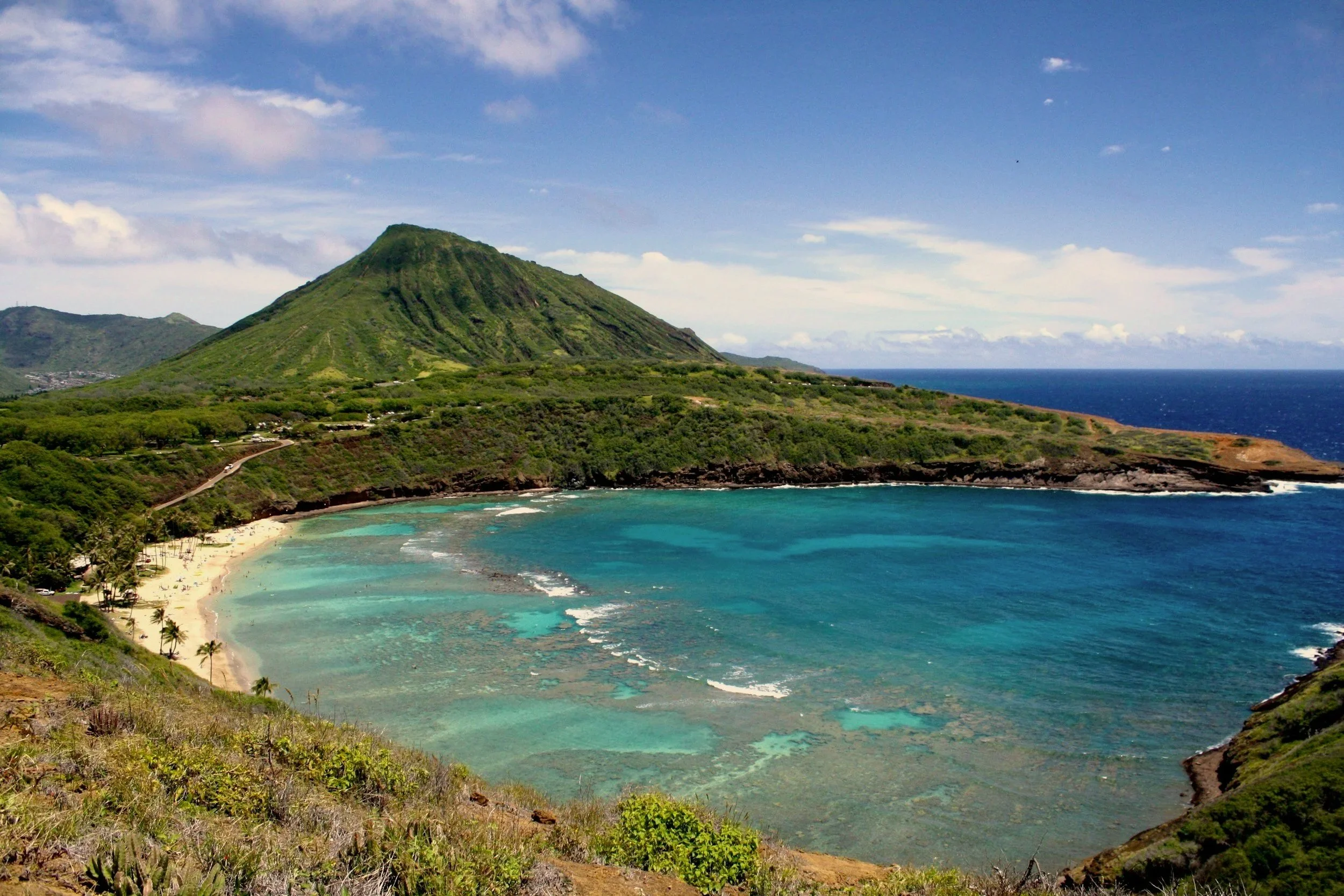
The most visited and most misunderstood of the islands. Honolulu brings world-class museums, a serious food scene, and the weight of history at Pearl Harbor, while forty minutes north the North Shore keeps its slow, small-town rhythm and some of the biggest surf on Earth. The Ko'olau mountains rise green and sheer behind the city, close enough to hike before breakfast. O’ahu rewards travelers who look past Waikīkī, and it's the best island for understanding Hawai'i as a living, working place rather than a resort.
Maui
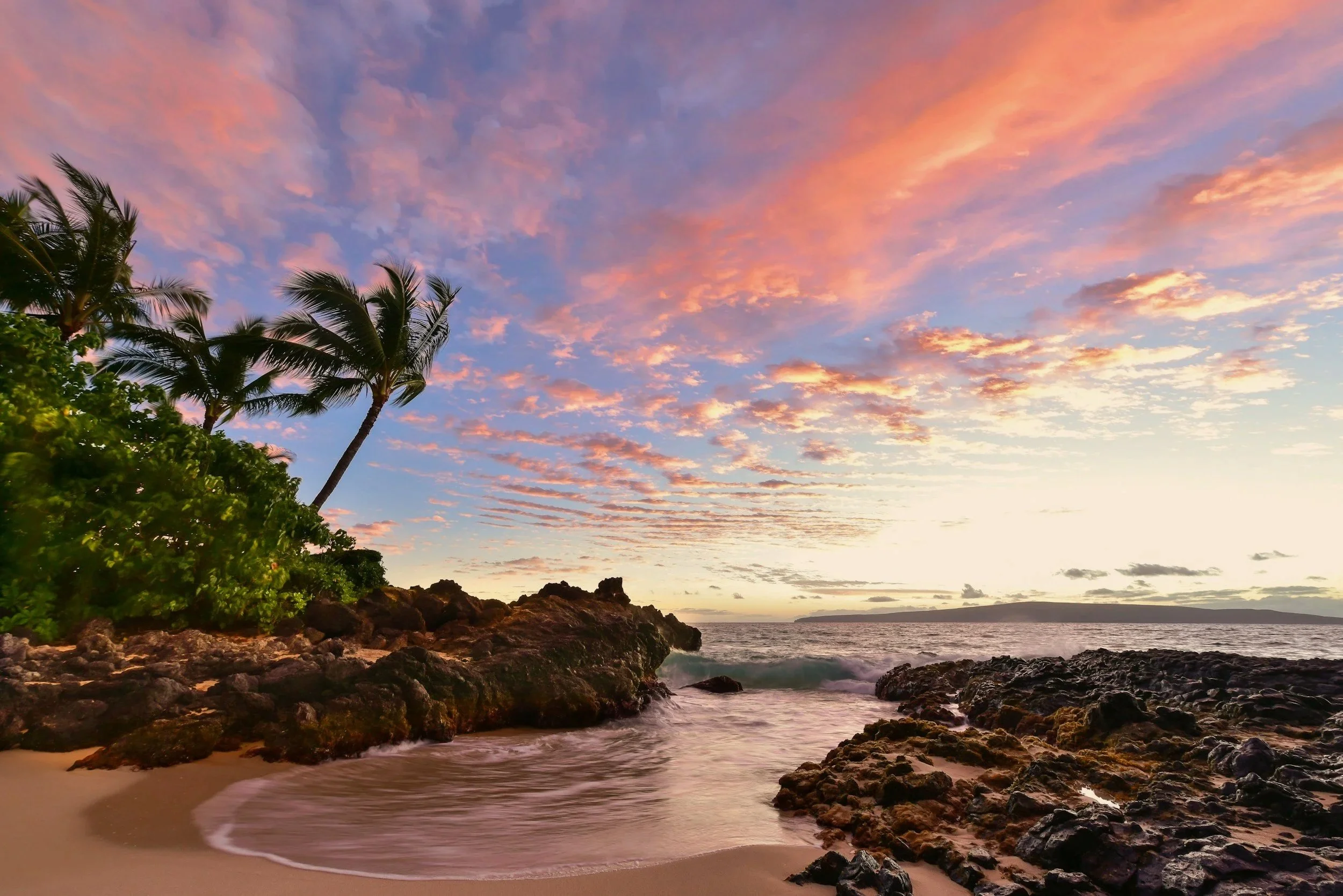
The island that does a little of everything, and does it beautifully. The road to Hāna winds along the windward coast past waterfalls and black sand, while upcountry on Haleakalā's slopes the air turns cool and the land opens into ranches, lavender farms, and vineyards. Winter brings thousands of humpback whales to the warm channel between Maui and Lāna'i, and the snorkeling at Molokini is among the clearest in the islands. Of all the islands, Maui balances comfort and adventure most easily, which is why it suits honeymooners so well.
Kaua’i
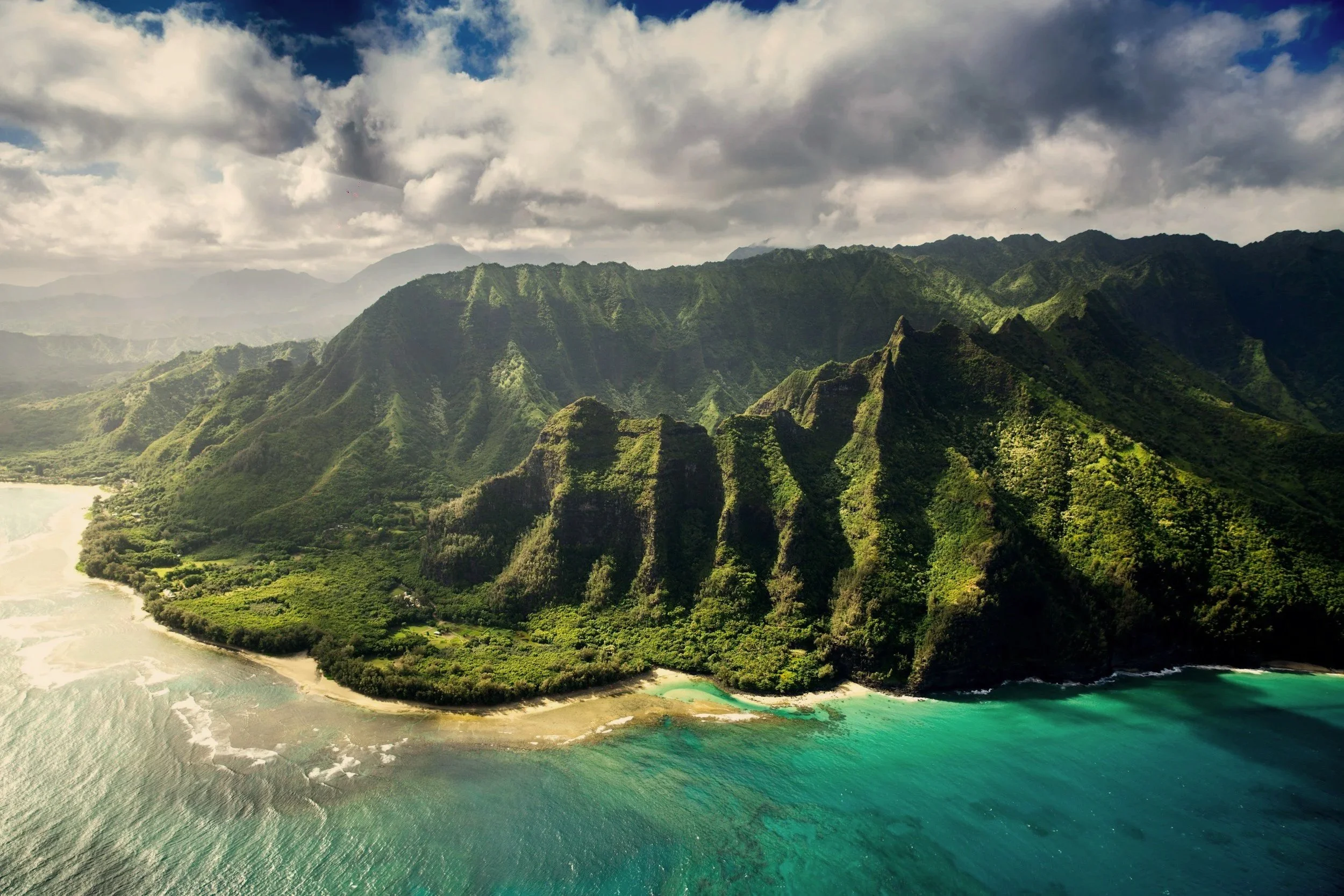
The oldest of the main islands, and the wildest-looking. Time has carved Waimea Canyon a thousand feet deep and folded the Nāpali Coast into green cliffs that rise straight out of the sea, most of it reachable only by boat, helicopter, or a long walk. Rain feeds everything here, which is why the island stays so impossibly green. Kaua'i moves at the slowest pace of the islands, with no building taller than a palm tree, and it suits travelers who want wilderness over nightlife.
Hawai'i Island (the Big Island)
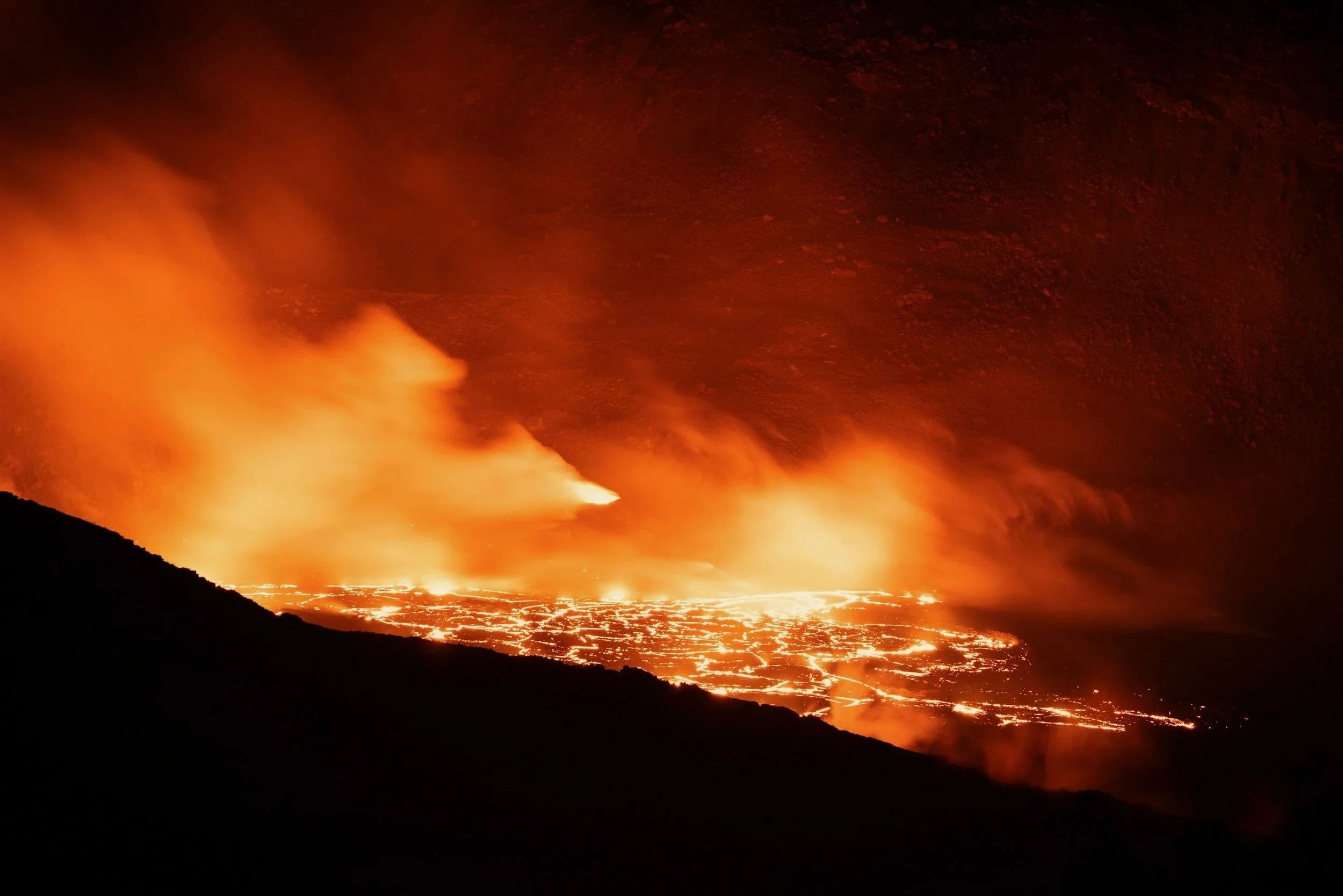
Larger than all the other islands combined, and still growing. Kīlauea has been reshaping the landscape for decades, and Hawai'i Volcanoes National Park lets you walk across steaming crater floors and through lava tubes left behind. The island holds eleven of the world's climate zones, from the black lava coast of Kona to snow on Mauna Kea's summit, where the clearest night skies on Earth draw astronomers from around the world. Come here for the geology, the Kona coffee farms, and the manta rays that gather off the coast after dark.
Moloka'i
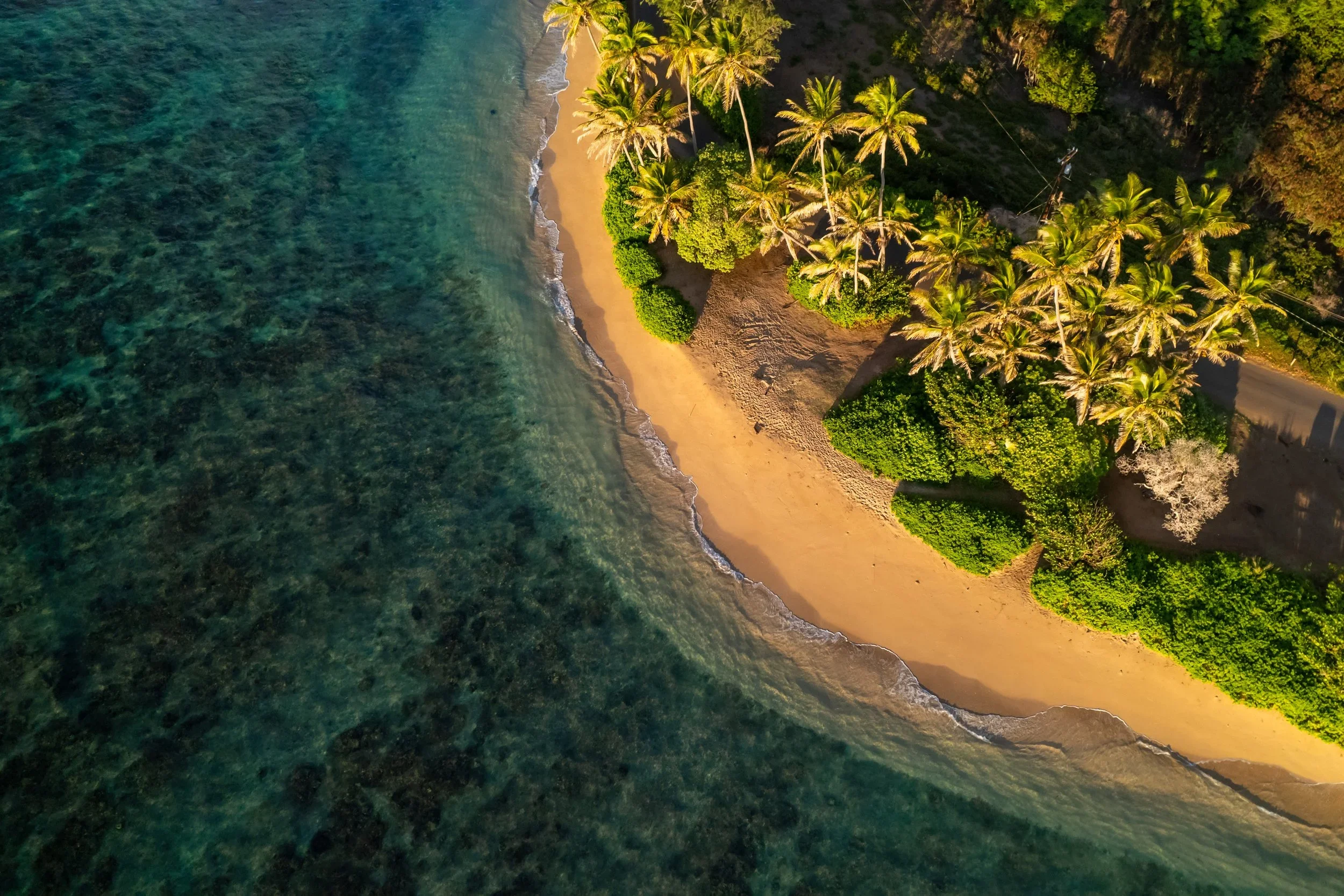
The island that chose a different path. There are no traffic lights, no resorts, and no interest in becoming either, with roughly half the population of Native Hawaiian ancestry, the highest proportion in the state. The sea cliffs along the north shore are among the tallest in the world, and the Kalaupapa peninsula below holds a difficult, important history. Moloka'i asks visitors to come with humility and curiosity, and travelers who do find a version of Hawai'i that exists nowhere else
Lāna'i
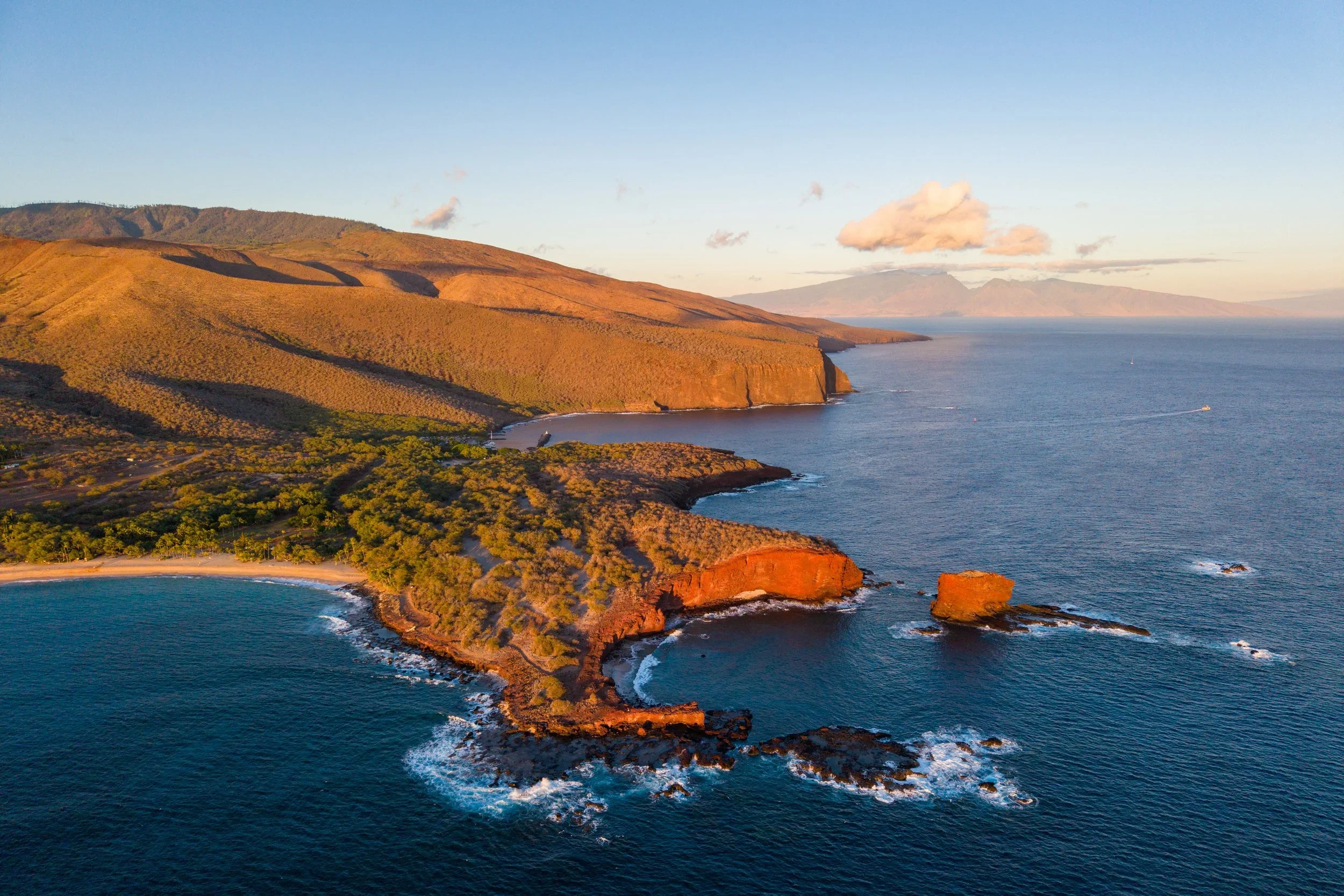
The smallest inhabited island open to visitors, and the quietest. Once covered end to end in pineapple fields, it's now home to just a few thousand people, two luxury resorts, and miles of red dirt roads best explored by four-wheel drive. Hulopo'e Bay offers excellent snorkeling and resident spinner dolphins, while the boulder-strewn Garden of the Gods glows at sunset. Lāna'i works beautifully as a two- or three-night add-on from Maui, just nine miles across the channel.